

Customer retention metrics are the numbers that show whether customers are actually coming back, not just whether they made one purchase. This article covers how to calculate customer retention rate, the top 10 metrics for customer retention worth tracking, and the tools that make measuring them practical instead of a monthly spreadsheet exercise.
What are customer retention metrics?
Customer retention metrics, also known as user retention metrics, measure how satisfied, engaged, and loyal customers are over time.
In simpler terms, they answer one question: are customers coming back, and why or why not.
These metrics show whether current retention strategies are working and where they’re falling short.
How to measure customer retention rate
Customer retention rate tells you how well a business retains customers over a specific period. Here’s the calculation:
- Choose your time frame: Decide on the period to measure, whether monthly, quarterly, or annually.
- Count your customers: Determine how many customers existed at the start of the period (“B”) and how many exist at the end (“E”).
- Calculate retention rate: With “N” as the number of new customers acquired during the period, the formula is ((E − N) / B) × 100.
- Interpret the results: A higher retention rate signals stronger customer loyalty. A lower rate points to gaps in retention strategy.
For more on why retention matters in the first place, HubSpot has a useful overview.
Top 10 customer retention metrics to track
These ten metrics cover the full picture: who’s staying, who’s leaving, and how much each customer is actually worth.
Customer Retention Rate (CRR)
Shows how well a business retains customers over a specific period, using the formula above.
Tracking CRR over time shows whether retention efforts are actually working.
Customer Churn Rate
Measures the rate at which customers stop doing business with a company.
Churn rate is the inverse of retention rate: a 70% retention rate implies 30% churn over the same period. Watching both together makes it easier to spot where the customer experience is falling short.
Revenue Churn Rate
Measures the percentage of recurring revenue lost from existing customers in a period, separate from revenue lost to a shrinking customer count.
This matters because losing a handful of high-value customers can hurt more than losing many small ones. A business can hold steady on customer churn while revenue churn quietly climbs, which is exactly the gap this metric is built to catch.
Loyal Customer Rate
Tracks the share of customers who make repeat purchases.
Understanding what keeps loyal customers coming back helps turn that behavior into word-of-mouth and testimonials. It’s also worth tracking the other end: customers who bought once and never returned, since that group often reveals where the experience breaks down.
Customer Lifetime Value (CLTV)
Predicts the total revenue a customer will generate over their relationship with a business.
CLTV makes it possible to focus marketing spend on the customers actually worth the investment, rather than treating every customer the same.
Monthly Recurring Revenue (MRR)
Indicates the predictable revenue generated from subscriptions each month.
Tracking MRR shows the stability and growth of recurring revenue streams over time, and it’s the number revenue churn rate above is measured against.
Average Order Value (AOV)
Tracks the average amount customers spend per transaction.
Raising AOV, through bundling or upsells, directly affects the bottom line without needing a single new customer.
Repeat Purchase Rate
Measures the percentage of customers who make multiple purchases.
A high repeat purchase rate is one of the clearest signs of both customer satisfaction and brand loyalty.
Customer Growth Rate
Reflects the rate at which the customer base is expanding over time.
A positive customer growth rate alongside a healthy retention rate is the combination that signals real, sustainable growth, one without the other tells a much shakier story.
Average Revenue Per User (ARPU)
Calculates the average revenue generated per customer.
Monitoring ARPU surfaces opportunities to grow revenue per customer through upselling or cross-selling, rather than only chasing new sign-ups.
For more on the operational side of retention, CustomerGauge has a solid explainer on customer retention management.
Best customer retention tools to reduce churn and drive loyalty
The right customer retention tools make the difference between guessing at these metrics and actually tracking them.
Baremetrics
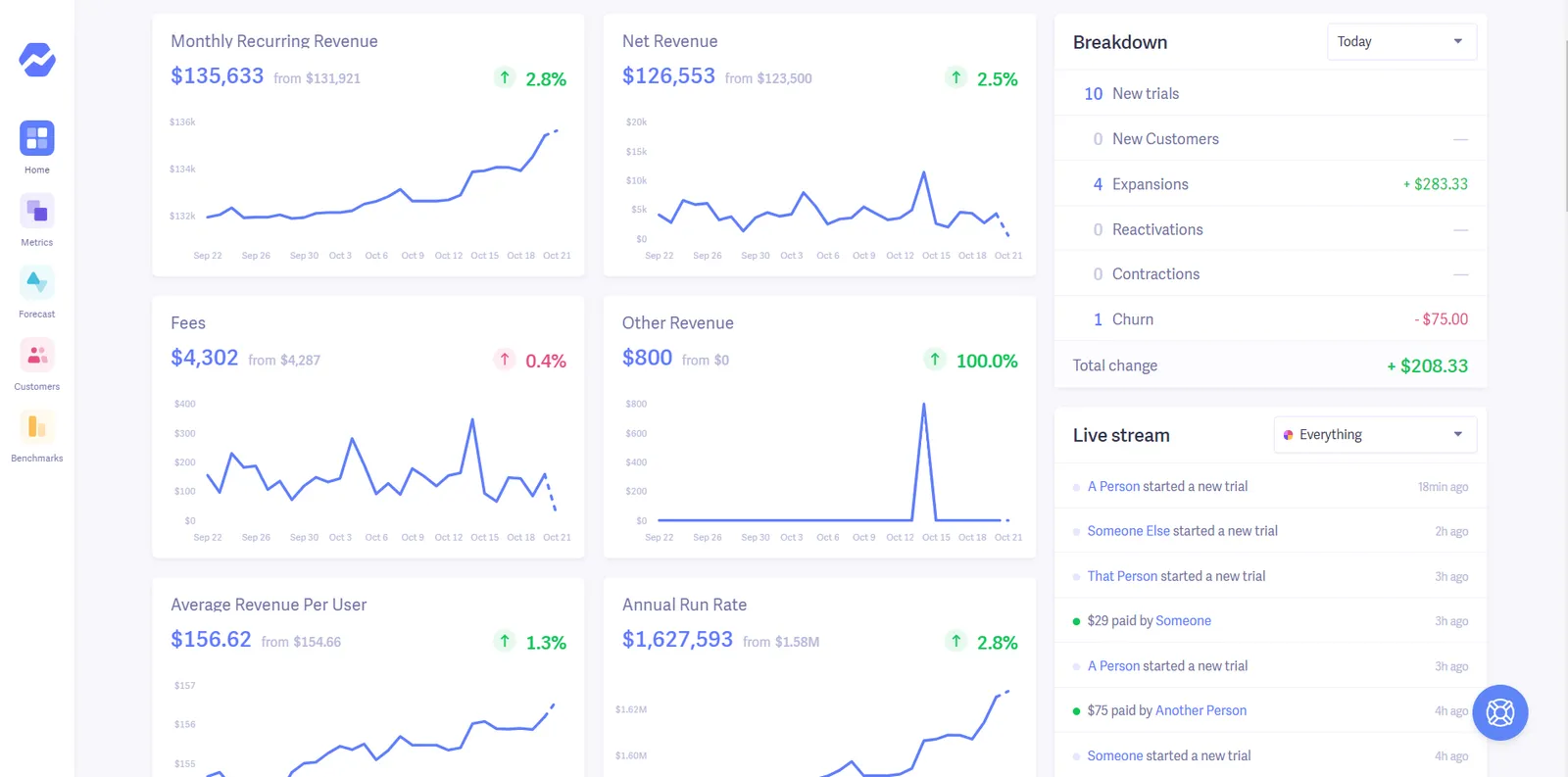
Baremetrics provides analytics built specifically for subscription businesses, with detailed metrics like churn rate, monthly recurring revenue (MRR), and customer lifetime value (CLTV).
It has a steeper learning curve for beginners than some alternatives.
Pricing: Baremetrics runs several pricing tiers; the Metrics plan starts at $108/month.
Putler
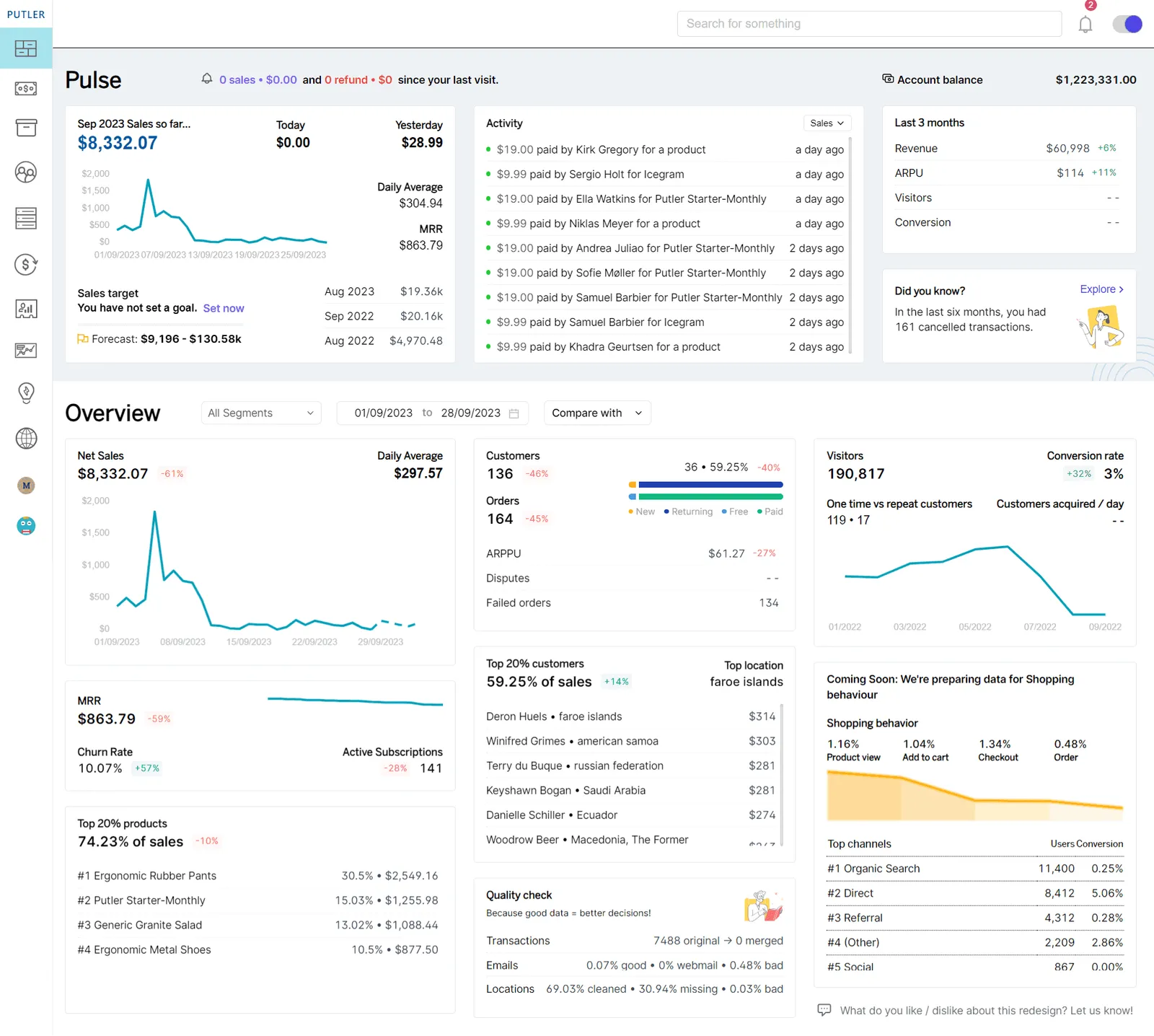
Putler is built for ecommerce and multi-channel businesses. Its RFM (Recency, Frequency, Monetary) analysis identifies loyal customers, potential churn risks, and campaign opportunities in one view.
Beyond RFM, Putler provides a full suite of metrics tracking revenue, visitors, and conversions over time, with filters that dig into purchase history, products bought together, and demographics.
Putler also flags likely churn by watching for changes in customer behavior and spending, and it breaks down purchase frequency and average order value to help refine retention strategy. Web analytics rounds this out with a full view of store performance alongside the customer data.
Pricing: Putler’s plans are revenue-based and start at $20/month.
Paddle
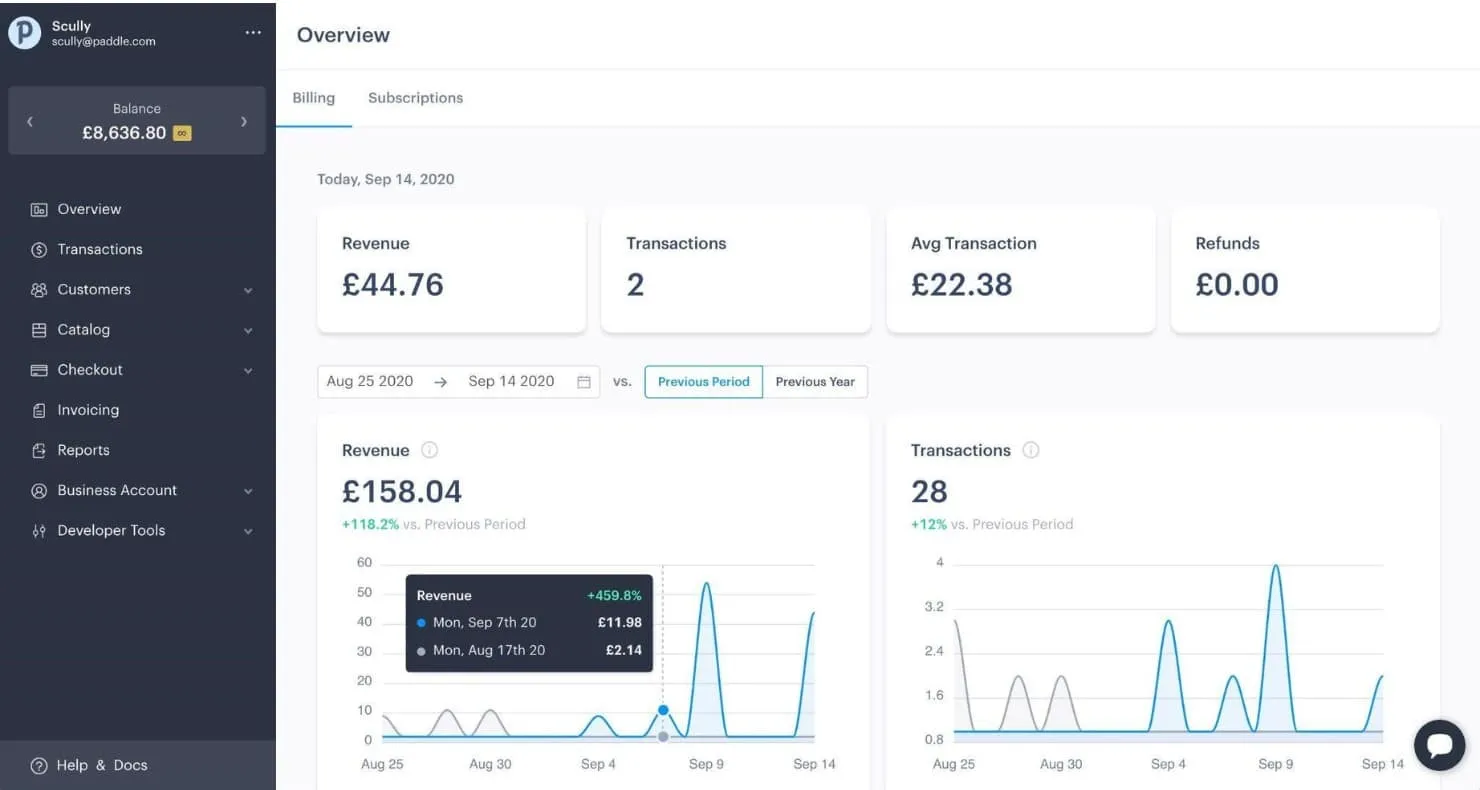
Paddle is a unified platform for subscription management and revenue, particularly suited to SaaS businesses. It handles payment processing, subscription renewals, and revenue reporting in one place.
Pricing can run higher than alternatives, especially at high transaction volumes.
Pricing: Custom, based on business requirements.
Increase customer retention with data
Accurate, cleansed, and centralized data is one of the most direct levers on customer retention:
- Tailored strategies: Comprehensive customer data lets a business tailor retention strategies to actual customer needs and preferences, not assumptions.
- Informed decision-making: Centralized data gives a clear enough picture to make real decisions about retention efforts, instead of working off partial information.
This is the gap ecommerce analytics tools like Putler close. Putler takes data further by fetching data from multiple sources into one complete picture of customer behavior, then enriching it into insights a business can actually act on.
The bottom line on customer retention metrics
Retaining customers is the more durable driver of business growth, and the data backs this up clearly: Bain & Company’s research found that a 5% improvement in customer retention can lift profits by 25% to 95%, a range that varies by industry but has held up since the original 1990s study.
Tracking the right metrics, and having accurate, centralized data behind them, turns customer retention from a vague goal into something a business can actually manage.
FAQs
Why is measuring customer retention important for SaaS businesses?
Tracking saas customer retention metrics shows customer satisfaction, flags where the product is falling short, and reflects how well the product actually fits its market, all of which feed directly into revenue and long-term growth.
What is the difference between customer acquisition and customer retention?
Customer acquisition focuses on attracting and converting new customers. Customer retention focuses on maintaining existing relationships to drive repeat purchases and long-term engagement.
What is the KPI for retention?
The core retention KPIs are customer retention rate, churn rate, customer lifetime value (CLTV), repeat purchase rate, and average order value (AOV).
What is a good customer retention rate by industry?
Retention benchmarks vary widely. SaaS companies typically target 90% or higher, ecommerce averages around 30%, and subscription services generally aim for 70% to 80%. Compare a rate against the specific industry rather than a universal target.
How often should customer retention metrics be measured?
Track core metrics like churn rate and retention rate monthly at minimum. Subscription businesses benefit from weekly health-score monitoring to catch at-risk accounts early. Review CLTV and ARPU quarterly for strategic planning.
What is the relationship between customer retention and profitability?
Bain & Company’s research found a 5% increase in retention can boost profits by 25% to 95%. Retained customers also cost less to serve and, according to research tracing back to a 2014 BIA/Kelsey study, tend to spend around 67% more over time than new customers.