

Shopify works, until the costs start eating into your margins. Transaction fees on third-party gateways, a growing app bill, and analytics locked behind a $399/month plan add up fast.
If you have been wondering whether there is a better fit for your store, you are not alone.
Here are the 8 best Shopify alternatives for eCommerce sellers in 2026, with verified pricing, honest trade-offs, and a clear way to figure out which one is right for you.
Why sellers are looking for a Shopify alternative
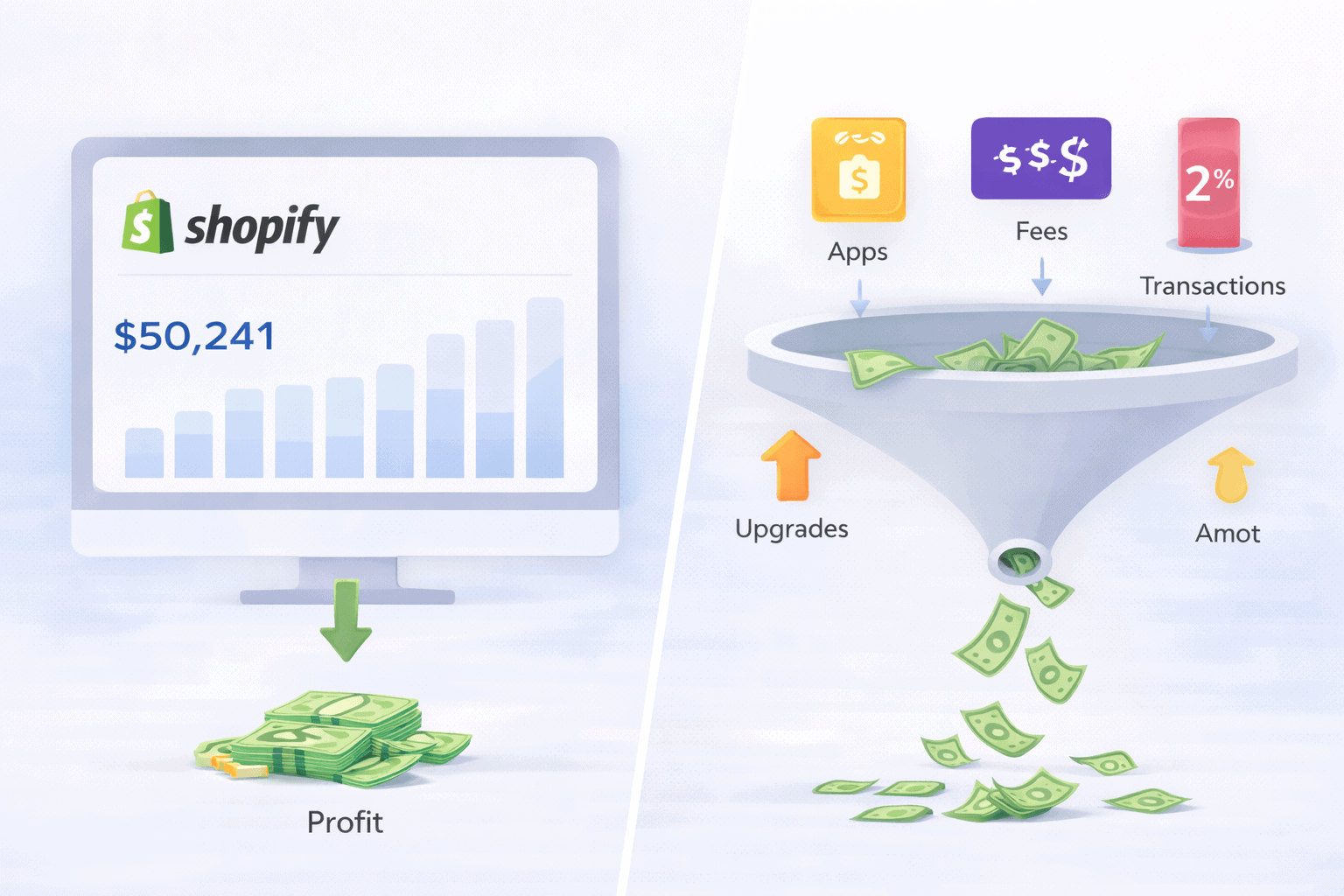
You log into your Shopify dashboard and the revenue number looks good. Then you open your bank account and wonder where it all went.
The costs stack up faster than most sellers expect. Between plan fees, paid apps, and transaction charges, a Basic plan store doing $50,000 a month often ends up spending $800 to $1,200 a month on Shopify alone. Here is where it goes:
- Monthly plan: $39 to $399/month depending on your tier
- Apps: The average Shopify merchant spends around $120/month on paid apps. Stack 7 to 10 apps and you hit $500 to $1,000/month
- Transaction fees: 0.6% to 2% on every sale if you use PayPal, Stripe, or any third-party payment gateway
- Analytics gap: Custom reporting is locked behind the Advanced plan at $399/month
Shopify also made some quiet changes recently. The mid-tier plan got renamed from “Shopify” to “Grow.” Shopify Plus jumped from $2,000 to $2,300/month. Third-party gateway fees on Plus moved from 0.15% to 0.20%.
Small numbers individually. Real money at volume.
None of this means Shopify is a bad platform. It means the total cost of running on it keeps climbing. And that is exactly why sellers are actively looking for a Shopify alternative in 2026.
What to look for in a Shopify alternative
Not every Shopify alternative solves the same problem. The right one depends on what is actually hurting you right now.

A few things worth checking before you commit:
- Transaction fees: Does the platform charge a cut on top of your payment gateway? BigCommerce and WooCommerce charge zero. Shopify charges 0.6% to 2% if you use a third-party processor.
- Built-in features: How many paid apps can you replace? Abandoned cart, subscriptions, and multi-currency are built in on some platforms and paid add-ons on others.
- Analytics: Can you get real answers from the platform’s native reports, or will you need a separate tool?
- Scalability: Does your plan force an upgrade as your revenue grows, or do you get room to scale?
- Technical setup: How much dev work is involved upfront and ongoing?
The eight platforms below cover the full range. Each one solves a different version of the Shopify problem.
The 8 best Shopify alternatives for eCommerce sellers
Switching platforms is a big decision. So instead of a generic list, here is what each platform actually does well, what it costs, and who it is the right fit for.
1. WooCommerce: best for WordPress-powered stores
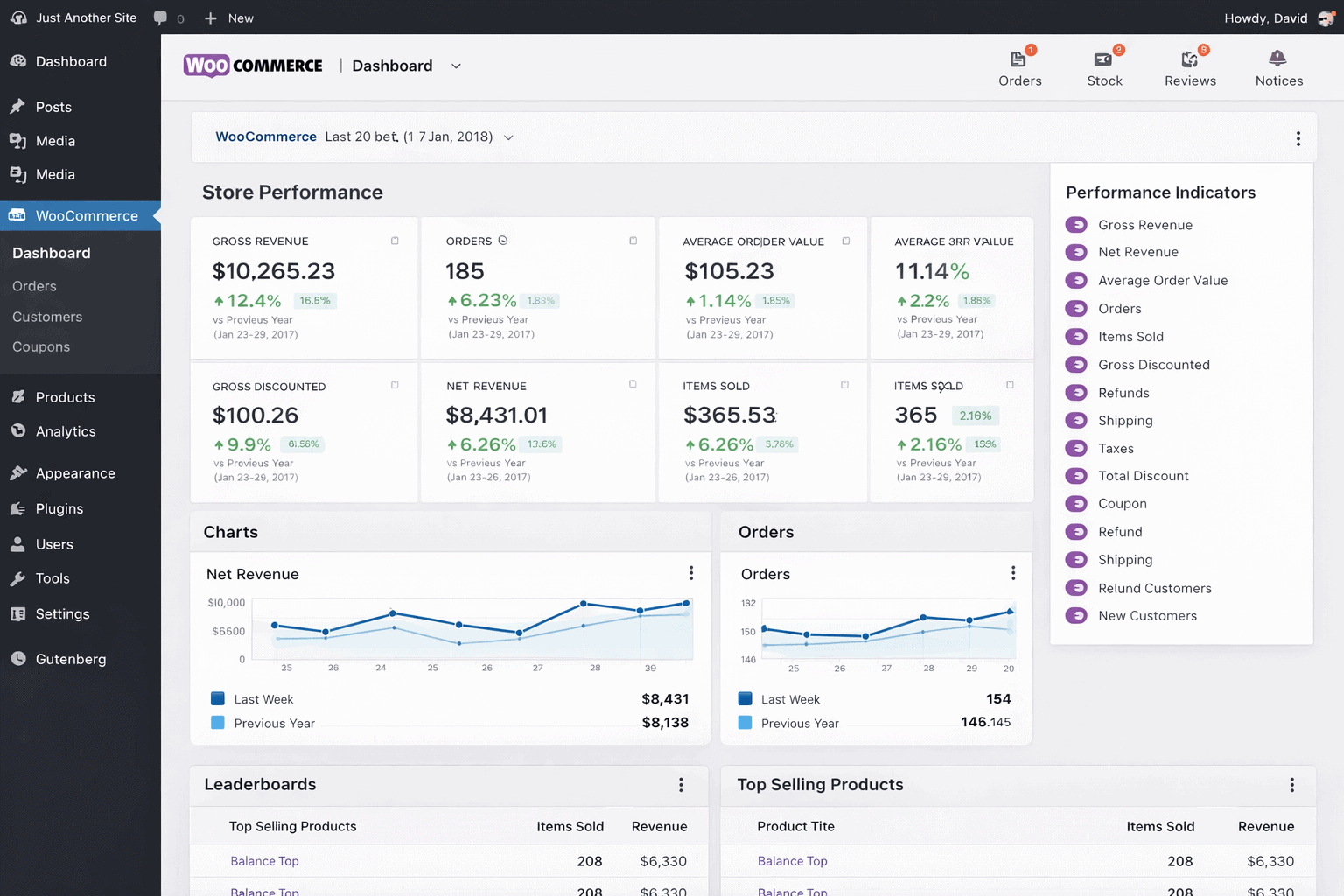
If you already run a WordPress site, WooCommerce is the most natural move. It is a free, open-source plugin that turns your WordPress site into a full eCommerce store. No platform fees. No revenue caps. No forced upgrades.
Pricing:
- Plugin: free
- Hosting: $5 to $100/month depending on traffic
- Domain: $7 to $20/year
- Premium extensions: $99 to $259/year each (subscriptions, table rate shipping, bookings)
- Realistic first-year cost: $300 to $1,500 for most small stores
What it does well:
Full ownership: You own your store, your data, and your code. No platform can change your fees, shut down your store, or force a migration.
SEO advantage: WooCommerce runs on WordPress, which gives you the strongest content and SEO foundation of any eCommerce platform.
Flexibility: With 1,000+ official WooCommerce extensions and 59,000+ WordPress plugins that can extend your store, you can build almost any store type — subscriptions, memberships, digital downloads, B2B wholesale, and more.
Zero transaction fees: WooCommerce takes nothing. You only pay your payment gateway (typically 2.9% + $0.30 with Stripe or PayPal).
Where it falls short:
You manage everything: Hosting, security, backups, updates, and plugin conflicts are your responsibility. There is no Shopify-style support line to call.
Setup takes time: WooCommerce is not a drag-and-drop builder. Getting a polished store live requires more work than Shopify or Wix.
Extensions add up: Advanced features like subscriptions ($259/year) and shipping rules ($99/year) cost extra. Your total stack can climb fast.
Best for: Content-driven brands already on WordPress. Budget-conscious sellers with some technical comfort. Anyone who wants full data ownership and no platform lock-in.
It is worth pairing WooCommerce with a dedicated analytics tool once your store is live. WooCommerce’s native reporting is basic, and a tool like Putler’s WooCommerce analytics gives you the full revenue picture across all your channels in one place.
2. BigCommerce: best for zero transaction fees and scale
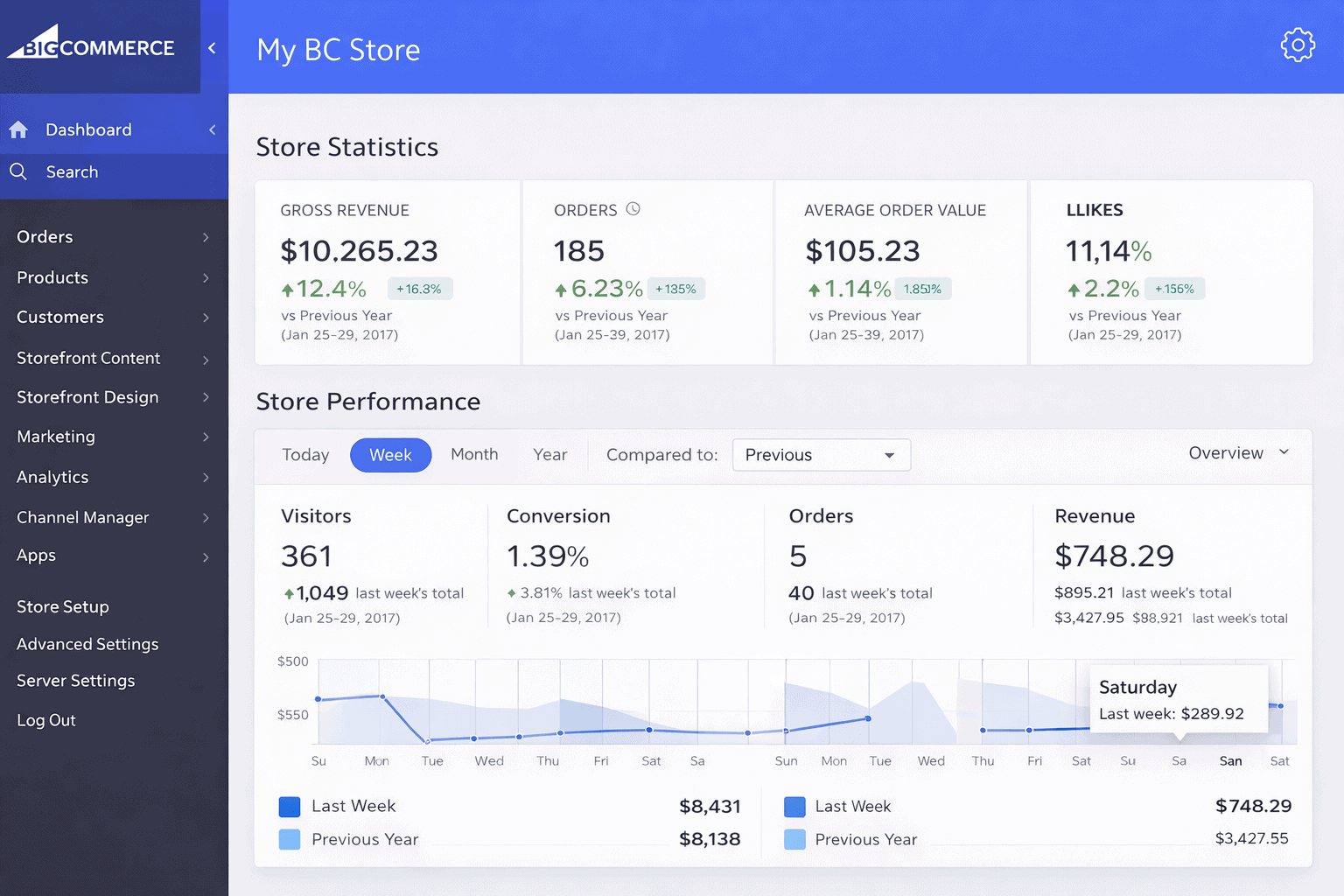
BigCommerce is the closest like-for-like Shopify alternative for mid-market sellers. It is a hosted SaaS platform with a strong built-in feature set, zero platform transaction fees on every plan, and genuine multi-channel selling out of the box.
Pricing (annual billing):
- Standard: $29/month — up to $50,000 annual sales
- Plus: $79/month — up to $180,000 annual sales
- Pro: $299/month — up to $400,000 annual sales
- Enterprise: custom pricing
What it does well:
Zero transaction fees: BigCommerce never charges a platform fee on top of your payment gateway. On Shopify Basic, that saves you 2% on every sale processed through PayPal or Stripe.
Built-in features that Shopify charges for: Abandoned cart recovery, real-time carrier shipping rates, multi-currency, customer groups, and product reviews all come included. No apps required.
Multi-channel out of the box: Amazon, eBay, Walmart, Google, Meta, TikTok, and Pinterest all connect natively through the Channel Manager.
Unlimited staff accounts: Every plan includes unlimited users. Shopify Basic gives you just two.
Where it falls short:
Revenue-based plan upgrades: This is BigCommerce’s biggest complaint. If your annual sales cross the threshold for your plan, BigCommerce automatically bumps you to the next tier. Shopify has no such cap.
Smaller app marketplace: Around 1,000 apps versus Shopify’s 8,000+. If you rely on a specific niche tool, check compatibility before switching.
Fewer themes: Around 150 paid themes versus Shopify’s 200+. Free theme options are limited.
Best for: Growing stores doing $200,000 to $5M+ in annual revenue. B2B and wholesale sellers. Merchants frustrated by Shopify’s transaction fees and app costs at scale.
3. Wix: best for beginners and design-first sellers
Wix is what you reach for when you want to get a store live fast without touching a single line of code. It is a drag-and-drop website builder with eCommerce built in. Not the deepest platform for high-volume selling, but for solopreneurs, creatives, and small catalog stores, it covers everything you need.
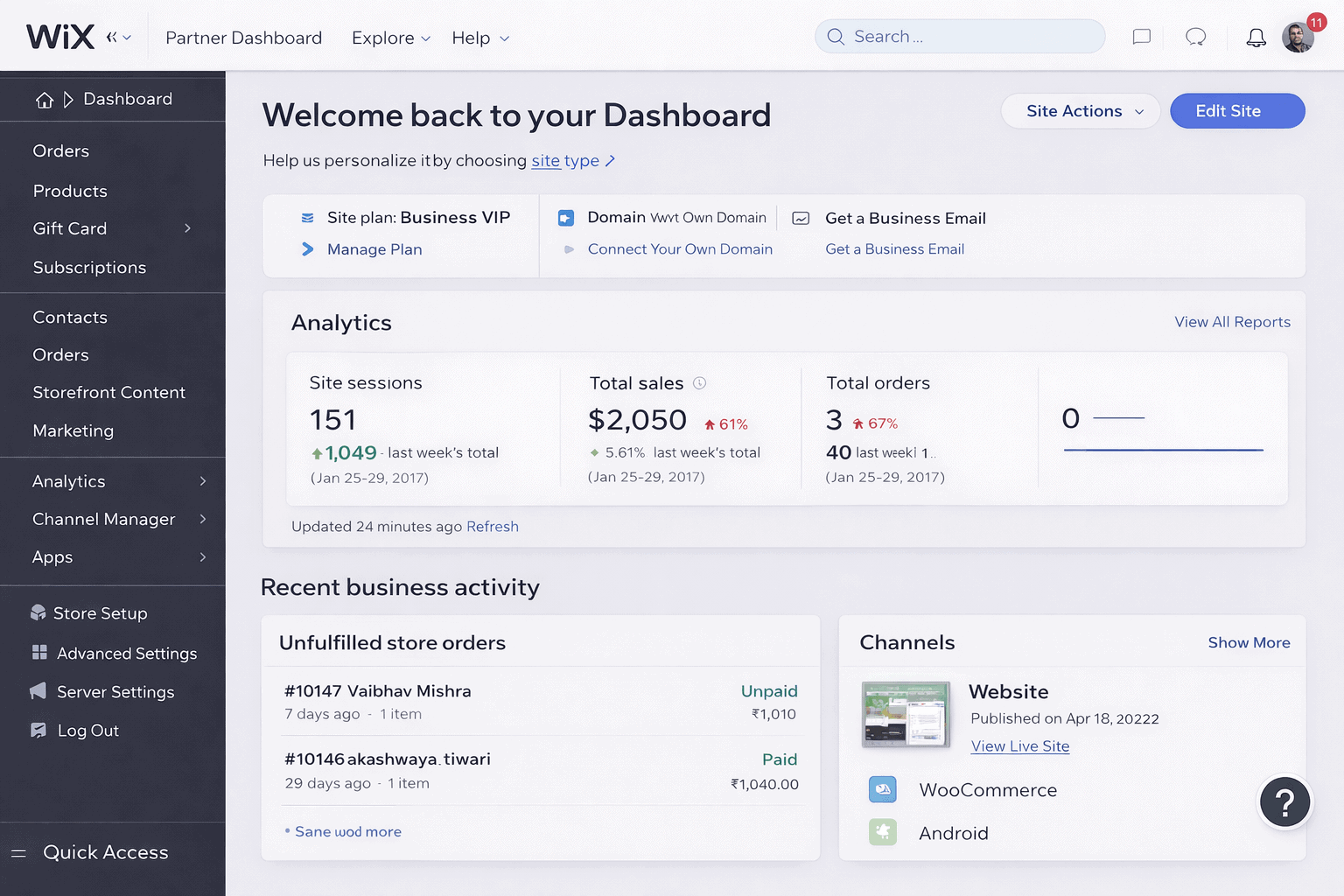
Pricing (annual billing):
- Core: $29/month — basic eCommerce
- Business: $36 to $39/month — standard eCommerce
- Business Elite: $159/month — advanced eCommerce
- No platform transaction fees on any plan
What it does well:
Easiest setup of any platform on this list: The drag-and-drop editor and AI store builder (Wix ADI) let you go from zero to live in a single afternoon. No developer needed.
Strong multichannel selling: Wix connects natively to Amazon, eBay, Etsy, Google, Facebook, Instagram, and TikTok. Broader marketplace reach than Squarespace.
Built-in booking and scheduling: If you sell services alongside products, Wix handles both from one dashboard. No third-party booking tool required.
No transaction fees: Wix keeps nothing on top of your payment gateway fees.
Where it falls short:
Template lock-in: Once you publish your site on a Wix template, you cannot switch templates without rebuilding from scratch. This is a hard platform limitation, not a bug.
50,000 product cap: Fine for most small stores. A real ceiling for anyone with a large catalog.
Scales poorly past $100K revenue: Real user feedback on Capterra consistently flags this. Wix works well for early-stage stores. Growing past six figures starts to expose its eCommerce limitations.
Smaller app marketplace: Around 500 apps versus Shopify’s 8,000+. Niche integrations are harder to find.
Best for: Solopreneurs, photographers, artists, coaches, and lifestyle brands. Sellers who want beautiful design and fast setup over deep eCommerce functionality. Stores doing under $100,000 annually with fewer than 500 SKUs.
4. Squarespace: best for creative and service-based sellers
Squarespace is the platform you choose when how your store looks matters as much as how it sells. Its templates are the best-designed of any platform on this list. If your brand is visual and your catalog is focused, Squarespace gets out of the way and lets the product speak.
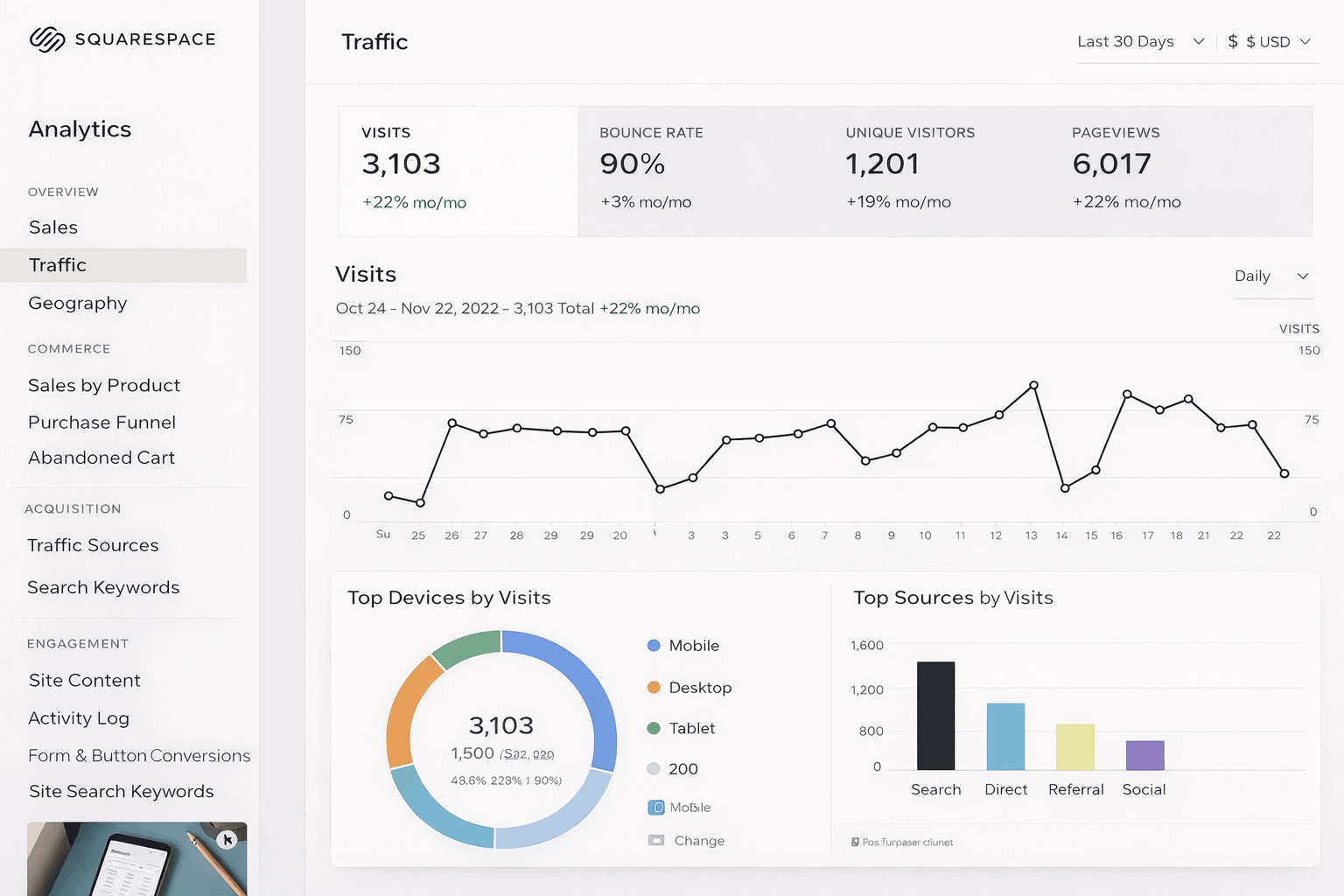
Pricing (annual billing, 2025 plan structure):
- Basic: $16/month — 2% transaction fee applies
- Core: $23/month — 0% transaction fee
- Plus: $39/month — 0% transaction fee
- Advanced: $99/month — 0% transaction fee, 0% on digital products
What it does well:
Best-in-class templates: Every Squarespace template is designed to professional standard. For visual brands, nothing else on this list comes close.
All-in-one simplicity: Hosting, SSL, domain, email, and blogging all come bundled. No separate tools to manage.
Acuity Scheduling built in: If you sell services alongside products, Squarespace and Acuity are now the same product. Appointments, classes, and consultations all managed from one place.
Strong for digital products and memberships: Courses, downloads, and subscription content are all supported natively.
Where it falls short:
Very limited payment gateways: Squarespace only supports Stripe, PayPal, Square, Squarespace Payments, Apple Pay, and Klarna. If your customers use anything else, you are out of options.
Tiny extensions marketplace: Around 49 extensions total. If you need a specific integration, chances are it does not exist natively.
No TikTok, Amazon, or Walmart: Multi-channel selling is limited to Instagram, Facebook, and Google Shopping. A significant gap versus Wix and BigCommerce.
250-variant cap per product: Fine for most stores. Restrictive for anyone selling configurable products with many size and color combinations.
Best for: Photographers, designers, musicians, and artists. Service businesses using Acuity. Boutique stores with small, curated catalogs. Sellers focused on a single market and currency who prioritize design over deep eCommerce features.
5. Ecwid by Lightspeed: best for adding commerce to an existing site
Most eCommerce platforms ask you to start over. Build a new site, migrate your content, learn a new CMS. Ecwid does not. It is a commerce widget you embed into any existing website like WordPress, Wix, Squarespace, Weebly, Joomla, or plain HTML, and your store is live without touching your current setup.
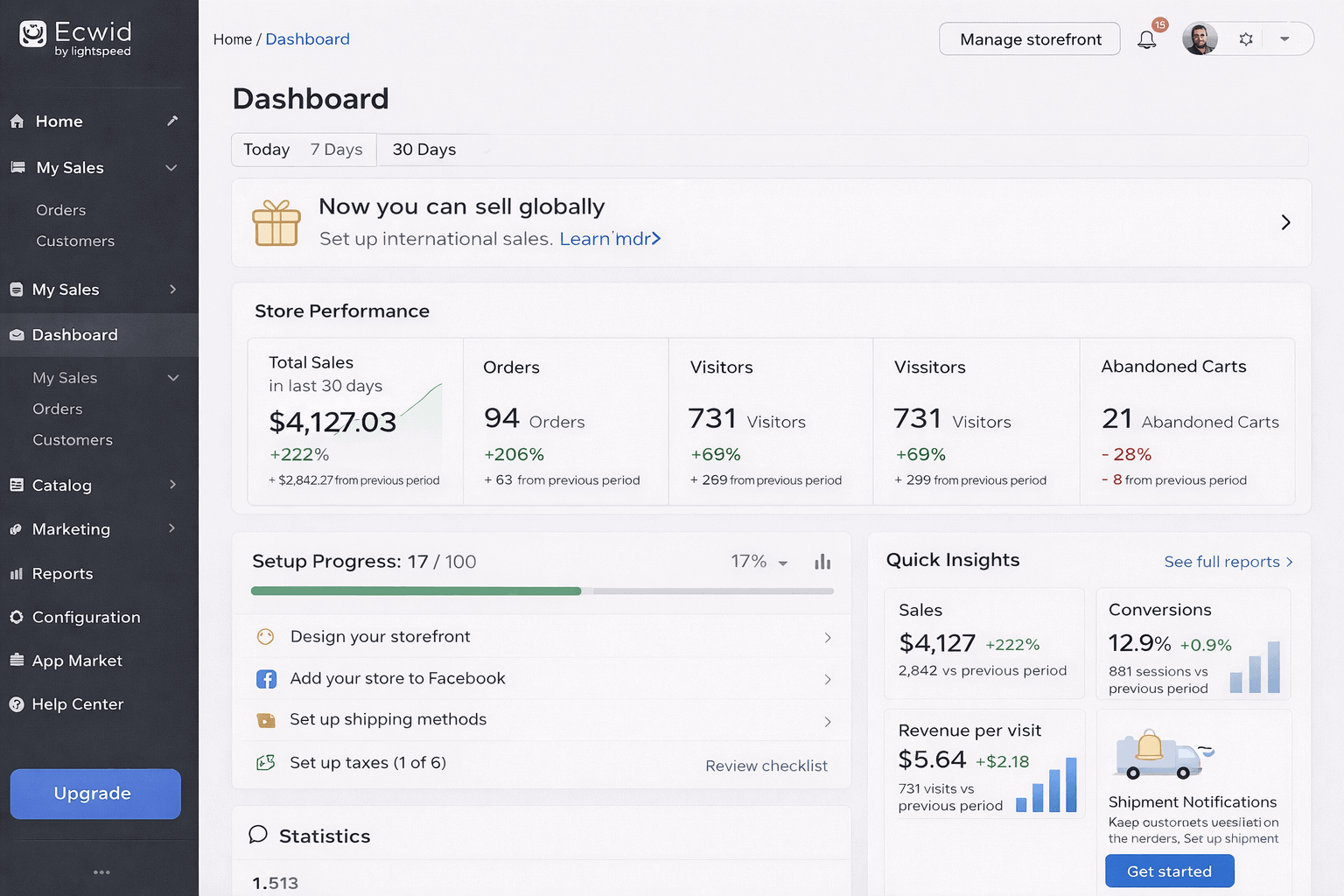
Pricing (annual billing):
- Starter: $5/month — 10 products
- Venture: $29/month — 100 products
- Business: $49/month — 2,500 products
- Unlimited: $119/month — unlimited products, full POS via Lightspeed Retail
Note: Ecwid removed its free plan in September 2024. Some third-party review sites still show $0. That is outdated.
What it does well:
Embed anywhere: One Ecwid account can power stores across multiple websites simultaneously. No other platform on this list does this.
Multi-channel social selling: Facebook, Instagram, TikTok, Pinterest, Snapchat, Google Shopping, YouTube, and WhatsApp all connect natively. Strong social commerce coverage.
No transaction fees: Ecwid takes nothing on top of your payment gateway. 70+ payment gateways supported.
53 languages auto-detected: Strong multilingual support out of the box. Good fit for international sellers with existing multilingual sites.
Where it falls short:
No built-in blog: A significant SEO limitation. If organic traffic matters to your business, you will need to manage content separately on your existing CMS.
Core features locked behind Business plan: Wholesale pricing, abandoned cart recovery, and marketplace selling on Amazon, eBay, and Walmart all require the $49/month Business tier.
Price hikes since Lightspeed acquisition: Multiple verified Trustpilot reviews from 2024 and 2025 flag roughly 53% annual price increases. The Lightspeed rebrand has also introduced support inconsistencies.
Best for: Bloggers, photographers, and creators who already have a site and want to add a store without rebuilding. Lightspeed Retail POS merchants. Multi-site sellers. Small catalog businesses prioritizing social commerce.
6. Magento / Adobe Commerce: best for enterprise sellers
Magento is not for everyone. It was never meant to be. If you are running a complex operation — large catalog, multiple storefronts, international markets, B2B pricing tiers, deep ERP integration — Magento gives you a level of control that Shopify Plus cannot match at any price.
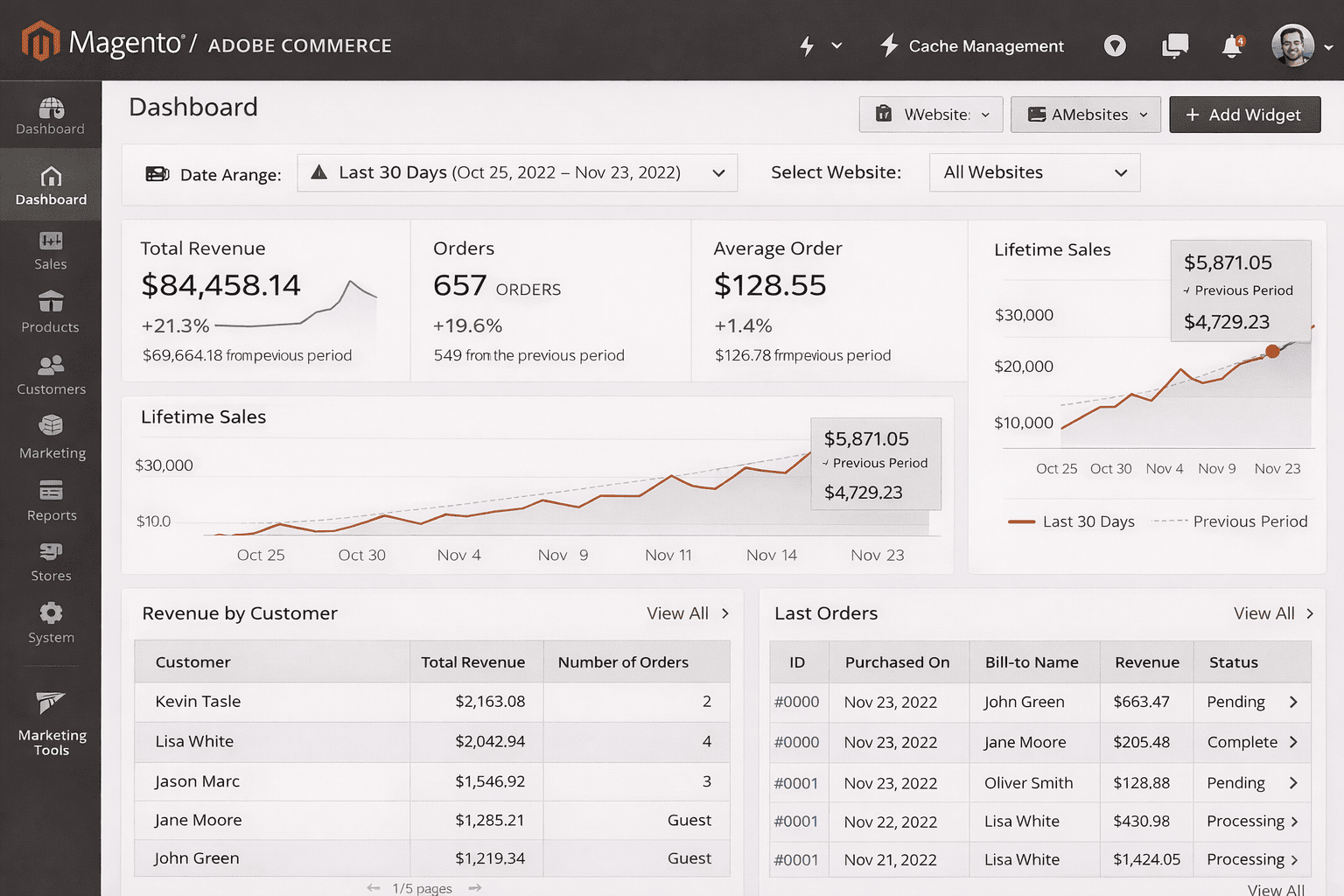
Pricing:
- Magento Open Source: free to download. Real annual cost $5,000 to $50,000+ once hosting, development, and extensions are factored in
- Adobe Commerce (PaaS): approximately $22,000 to $125,000+/year license, tiered by GMV
- Adobe Commerce as a Cloud Service (ACCS): SaaS model launched June 2025, custom pricing
- Total cost of ownership at $5M to $10M GMV: typically $150,000 to $300,000+/year all-in
What it does well:
Unmatched customization: Every part of the platform — catalog, checkout, pricing, fulfillment logic, customer experience — can be built exactly to spec. No other platform on this list comes close for complex requirements.
Enterprise B2B built in: Company accounts, contract pricing, purchase orders, quote management, and approval workflows all come native. Shopify Plus requires apps and workarounds for most of this.
Multi-store from one backend: Manage multiple brands, regions, languages, and currencies from a single admin. Adobe Commerce Optimizer supports 250 million+ SKUs and 30,000 prices per SKU.
Adobe ecosystem integration: Deep native connections to Adobe Analytics, Adobe Target, Marketo, and Adobe Experience Manager for brands already invested in the Adobe stack.
Where it falls short:
TCO is high: $150,000 to $300,000+/year for a mid-market implementation is not unusual. This is an enterprise tool with enterprise costs.
Developer dependent: You cannot run Magento without a dedicated development team or agency. Every customization, upgrade, and security patch requires technical resources.
Long implementation timelines: Enterprise deployments typically take 6 to 12 months from contract to launch.
Upgrade treadmill: Magento 2.4.7 reaches end of life in November 2026, and 2.4.8 follows in 2027. Security patches arrive regularly. Keeping the platform current is a continuous operational cost.
Best for: Retailers doing $5M+ in annual GMV with in-house development resources or an agency partner. Complex B2B manufacturers and distributors. Brands already using Adobe Experience Cloud. Operations that have genuinely outgrown what any SaaS platform can offer.
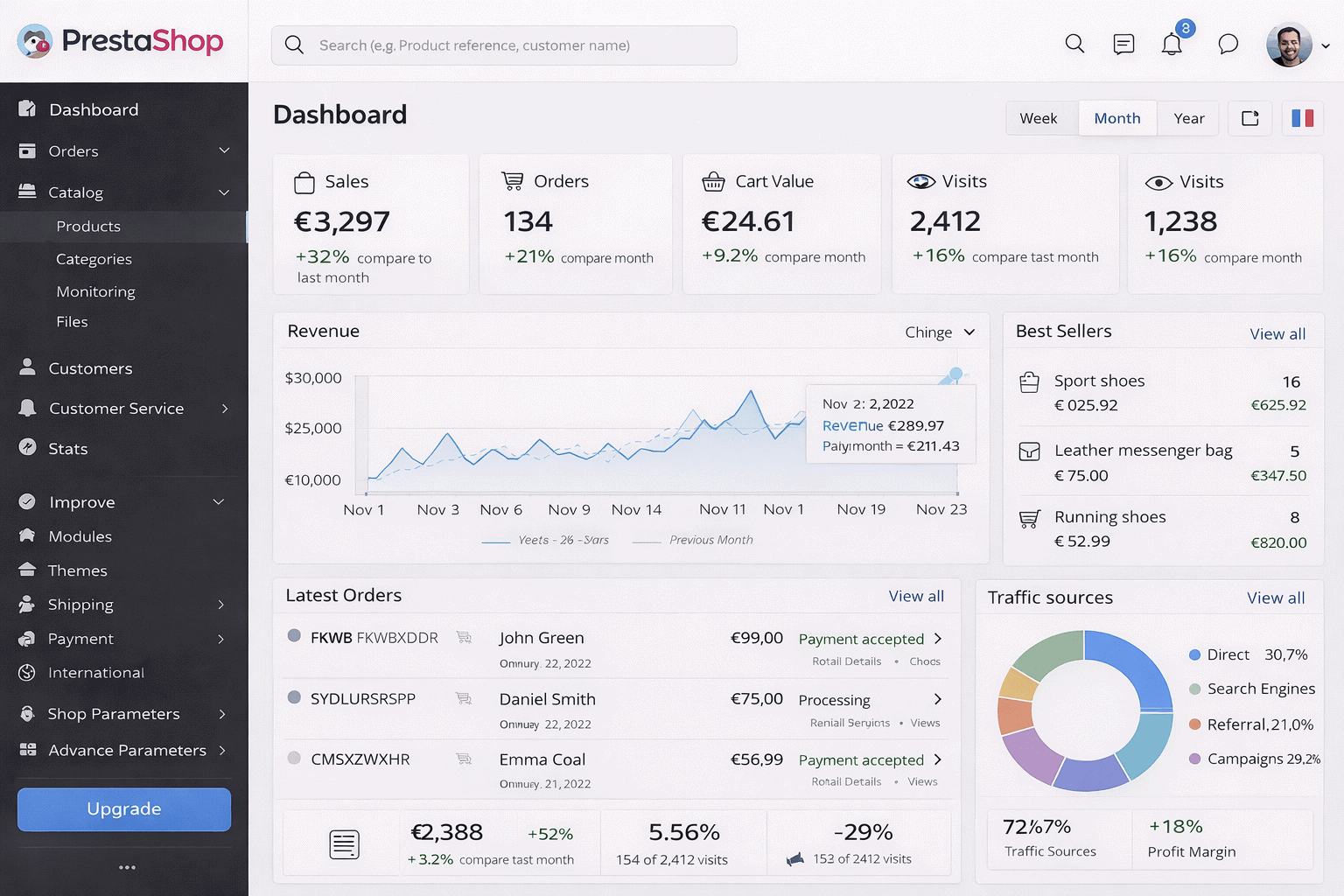
7. PrestaShop: best for European and open-source sellers
PrestaShop is the dominant open-source eCommerce platform across Europe, with strong adoption across France, Spain, Italy, and Poland.
If you are selling into European markets, need full code ownership, and want a platform built with EU compliance in mind, PrestaShop deserves serious consideration.
Pricing:
- Classic (self-hosted): free to download. Hosting, modules, and development are your costs
- Hosted plan: approximately €24/month on annual billing
- Premium modules: €30 to €550 each, purchased once (no recurring subscription per module)
- Realistic first-year TCO: €500 to €3,000+ depending on module stack and dev needs
What it does well:
Full code ownership: You own everything. No platform can change your fees, restructure your plan, or shut down your store.
Strong European market fit: Built-in multilingual support, multi-currency, EU payment gateways (Mollie, Klarna, Adyen, PayPlug, SEPA), and GDPR-ready modules. No other platform on this list is as well-suited for European multi-country selling.
4,000+ modules and 2,000+ themes: Large Addons Marketplace covering payments, shipping, SEO, marketing, and B2B. Most modules are one-time purchases, not recurring subscriptions.
Native multi-store: Run multiple storefronts, languages, and currencies from one PrestaShop installation without extra platform fees.
PrestaShop 9 released June 2025: Major update with Symfony 6.4, PHP 8.1 to 8.4 support, a new REST Admin API, and a modern Bootstrap 5 frontend.
Where it falls short:
No native POS: If you sell in-person, you need a third-party module. There is no Shopify POS or Lightspeed-style native solution.
Modules cost money fast: PrestaShop’s answer to most feature requests is a paid module. Essential functionality like advanced shipping rules, loyalty programs, and live chat all require separate purchases.
Backend UX is dated: The admin interface is functional but not intuitive. Non-technical users find it frustrating compared to Shopify or Wix.
Version upgrades are high-risk: Moving between major PrestaShop versions requires module and theme re-certification. It is not a one-click upgrade like SaaS platforms.
Best for: Tech-savvy sellers and development agencies. European SMBs selling across multiple EU markets. Merchants who want open-source freedom without the WordPress dependency. Stores with developer support and a need for deep customization at lower recurring cost than Magento.
8. Putler: best for multi-channel analytics across any platform
Every platform on this list solves the storefront problem. Putler solves a different one.
One of the top reasons sellers leave Shopify is analytics. Custom reporting on Shopify is locked behind the Advanced plan at $399/month. And even then, it only shows you what is happening inside Shopify. If you also sell on Etsy, take payments through PayPal, and run a WooCommerce store on the side, Shopify analytics cannot help you see the full picture.
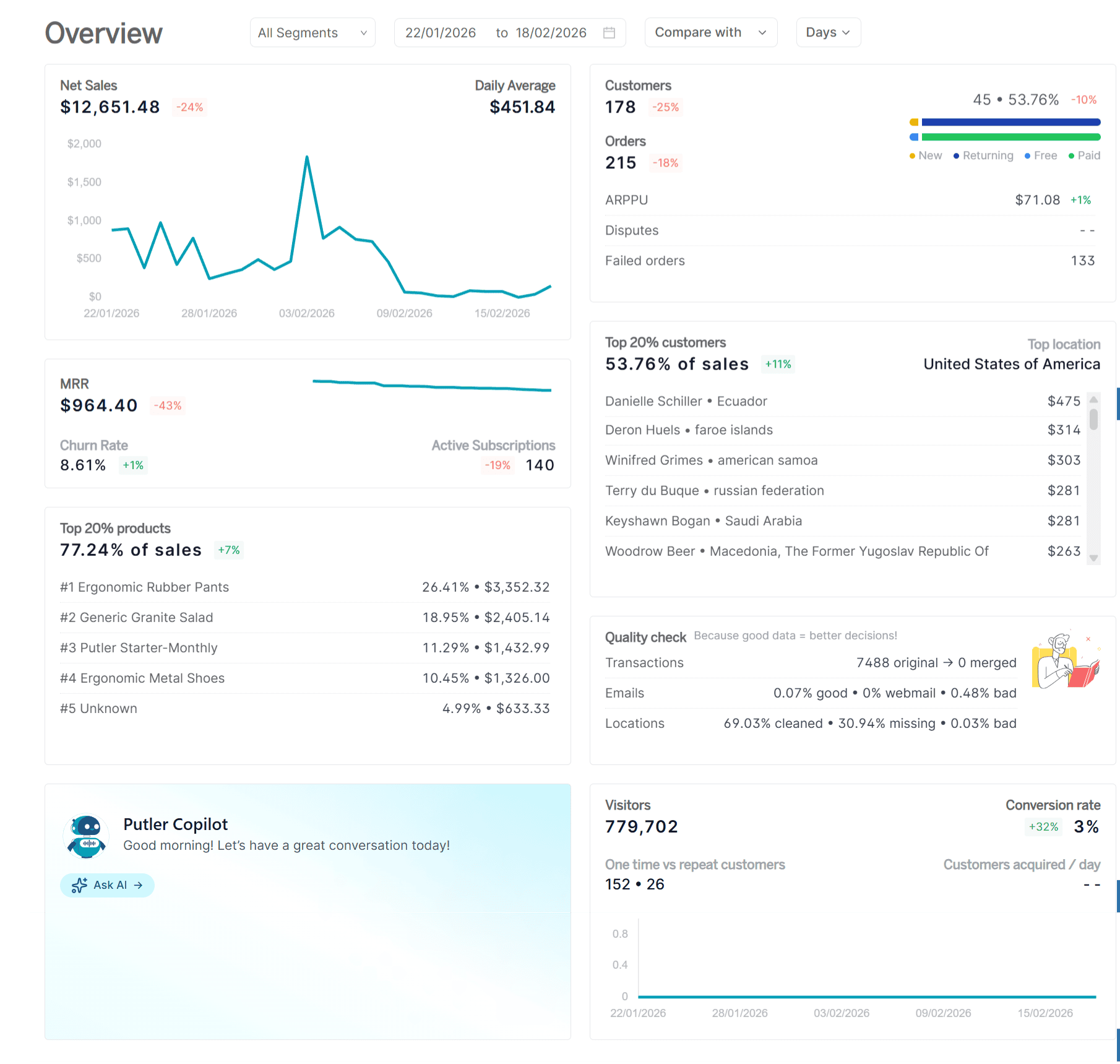
Putler connects all of it. It pulls data from Shopify, WooCommerce, BigCommerce, Magento, Etsy, Amazon, eBay, PayPal, Stripe, Braintree, and Google Analytics into one unified dashboard. It automatically deduplicates transactions that appear across multiple sources, normalizes 36 currencies, and surfaces the numbers that actually matter.
For a deeper look at exactly what Shopify analytics leaves out, this breakdown covers every gap and how sellers are filling them.
Pricing:
- Starter: $20/month — up to $10,000 monthly revenue, 3 data sources
- Growth: from $50/month — 15 data sources, unlimited users, 5 years of history
- 14-day free trial. First month $1. No credit card required.
What it does well:
Unified multi-channel view: One dashboard for every store, every gateway, every marketplace. No more switching between tabs or reconciling spreadsheets.
RFM customer segmentation: Putler automatically sorts your customers into 11 segments — Champions, Loyal, At Risk, Lost, and more — so you know exactly who to target and when. Learn more about how RFM segmentation works and why it matters for eCommerce growth.
Subscription and SaaS metrics: MRR, ARR, churn rate, and customer lifetime value all calculated automatically. Useful for anyone selling subscriptions alongside physical or digital products.
Web analytics built in: A cookieless alternative to GA4 that connects traffic data to actual transaction data. You see which pages and sources drive real sales, not just visits.
AI-powered forecasting: Revenue prediction and retention modeling built in. Useful for planning inventory, budgets, and campaigns ahead of time.
Works with any platform you switch to: Whether you move to WooCommerce, BigCommerce, or stay on Shopify — Putler connects to all of them. You do not lose your analytics when you replatform.
Best for: Multi-channel merchants selling on two or more platforms or payment processors. Shopify Basic and Grow users who need reporting without upgrading to Advanced at $399/month. Subscription and digital product sellers. Agencies managing analytics across multiple client stores.
Which Shopify alternative is right for you?
The honest answer is: it depends on where your store is right now and where you want it to go.
Here is a quick way to match your situation to the right platform:
You are on WordPress and want full control. WooCommerce is the obvious move. Setup takes more effort than Shopify but long-term costs are significantly lower and you own everything outright.
You are scaling past $200,000 in annual revenue. BigCommerce is the most direct Shopify replacement. Zero platform fees, built-in features that replace most of your app stack, and genuine multi-channel selling without extra tools.
You are just starting out and want something live fast. Wix gets you there in an afternoon. Keep your catalog under 500 SKUs and your revenue under $100,000 and it works well. Past that, you will start to feel the ceiling.
Your brand is visual and your catalog is small. Squarespace gives you the best-looking storefront on this list. Just go in knowing the payment gateway options are limited and the extensions marketplace is thin.
You already have a website and want to add commerce without rebuilding. Ecwid is the only platform that lets you do that cleanly. One account, multiple sites, no migration required.
You run a complex operation at $5M+ GMV with a dev team. Magento gives you a level of control and B2B depth that no SaaS platform can match.
You are a tech-savvy seller targeting European markets. PrestaShop gives you open-source freedom, strong EU payment coverage, and one-time module purchases instead of recurring app subscriptions.
You sell across multiple channels or payment gateways. Add Putler on top of whichever platform you choose. It connects everything into one dashboard and gives you the analytics clarity that most platforms — including Shopify — cannot provide natively. See how sellers are using multi-channel analytics to get a complete view of their business.
FAQ: Shopify alternatives
What is the best free Shopify alternative?
WooCommerce is the strongest option. The core plugin costs nothing and there are no platform transaction fees. Your real costs are hosting ($5 to $100/month), a domain, and any premium extensions you need. A lean WooCommerce store can run for under $200 a year. PrestaShop is the other solid free option, particularly for European sellers.
Is WooCommerce better than Shopify?
It depends on your situation. WooCommerce gives you more flexibility, full data ownership, and zero platform fees. Shopify gives you a managed environment, faster setup, and a larger app ecosystem. WooCommerce wins if you are on WordPress, comfortable with some technical upkeep, and want to keep costs low at scale. Shopify wins if you want everything managed for you and are willing to pay for that convenience.
Which Shopify alternative has no transaction fees?
Several platforms charge zero platform transaction fees. WooCommerce, BigCommerce, Wix, Ecwid, PrestaShop, and Magento all take nothing on top of your payment gateway’s standard processing rate. Squarespace charges 2% on its Basic plan but drops to 0% from Core upward.
Can I use analytics tools with any Shopify alternative?
Yes. Tools like Putler connect to WooCommerce, BigCommerce, Magento, Etsy, Amazon, PayPal, Stripe, and more. So even if you move away from Shopify, you keep a unified analytics view across every channel and gateway from one dashboard. You can explore the eCommerce metrics that matter most for growing stores here.
Find the best Shopify alternative for your store in 2026
Shopify built its reputation on making eCommerce accessible. For millions of sellers it still does that job well. But as stores grow, the transaction fees, app costs, and analytics gaps start to add up in ways that are hard to ignore.
The good news is the alternatives have never been stronger.
WooCommerce and PrestaShop give you full ownership at low cost. BigCommerce gives you enterprise features without the platform surcharges. Wix and Squarespace make getting started easier than ever. Ecwid lets you add commerce to what you already have. Magento gives large operations the control they need.
Pick the one that matches where your store is today. Then add Putler on top to get the analytics clarity your business actually needs — regardless of which platform you run on.
- Shopify Analytics Limitations: Every Gap and How to Fix Them
- WooCommerce Analytics: How to Get Deeper Insights from Your Store
- Multi-Channel Analytics: How to Unify Your eCommerce Data
- RFM Analysis: How to Segment Your Customers and Grow Revenue
- The eCommerce Metrics That Actually Matter for Growing Stores