
Amazon is a popular eCommerce platform, ranking as the third largest search engine and having the most customers worldwide.
But interestingly, big businesses and influencers tend to prefer Shopify for their stores.
I have helped sellers navigate this decision many times, and the answer is rarely straightforward.
The choice between Amazon and Shopify depends on your business model, growth goals, and the level of control you want over your brand.
Many sellers make the wrong choice by focusing on just one factor rather than the whole picture.
That’s why we need to dig into this topic a bit more.
Amazon vs Shopify: Overview
The main difference between Amazon and Shopify lies in their structure.
Amazon functions as a huge marketplace.
For example, if you sell scented candles, when someone searches, your product appears along with other sellers’ products.
Customers can then compare various options based on ratings, reviews, and prices.
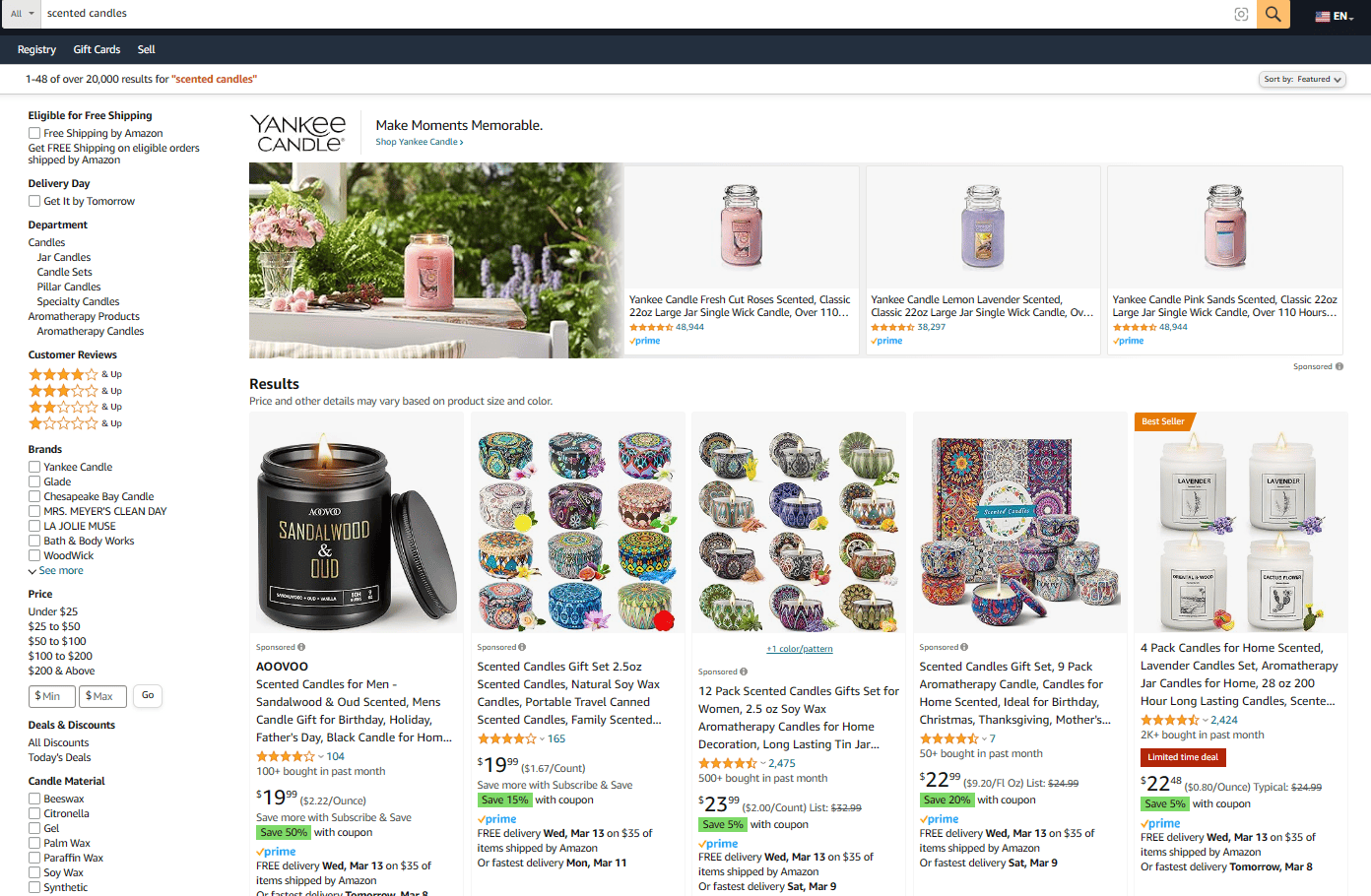
However, you have limited control over the website’s appearance and operation. You are also bound to follow Amazon’s terms and policies.
On the other hand, Shopify gives you your own standalone store. You have complete control over your store.
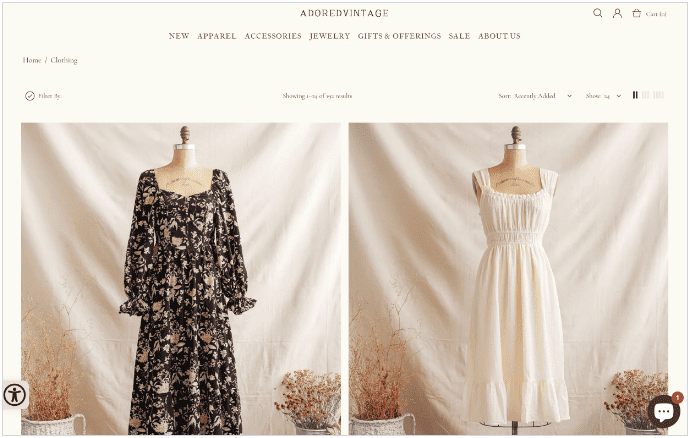
It also offers complete customization to suit your preferences. But to make it a well-known store, you need to have a good understanding of Shopify’s marketing strategies first.
In Shopify, you set the rules. Your customers visit your store exclusively for your product.
Amazon vs Shopify: Pros & Cons
The main question remains: which one should you choose for an eCommerce store, Amazon or Shopify?
Let’s analyze the pros and cons of each one to make an informed decision.
Pros and Cons of Amazon
Amazon has high sales potential, but everything can go sideways with negative ratings.
Before starting to sell on Amazon, let’s take a closer look at the positives and negatives of this platform.
Pros
- Free two-day shipping encourages more purchases and boosts sales
- Amazon has over 300 million customers worldwide, giving sellers access to diverse markets
- FBA Services handles shipping and returns, freeing up sellers’ time
- Amazon’s reputation boosts conversion rates for sellers
- Amazon offers customer service support for both buyers and sellers
Cons
- Platform fees add up with account, selling, and FBA fees
- Limited branding options and basic page layout on Amazon
- Intense competition due to many sellers makes it hard to stand out
- Amazon controls customer data, limiting direct relationships
- Less control over customer experience compared to Shopify
Now let’s discuss the pros and cons of Shopify.
Pros and Cons of Shopify
Shopify provides hosting, security, and payment processing solutions to your store. But it has a steep learning curve.
Pros
- Customize your Shopify store easily.
- Control your branding, customer experience, and data.
- Affordable plans start at $29/month.
- Direct access to customer data for better relationships.
- Support for multiple payment gateways.
Cons
- 2% transaction fee (except for Shopify Payments).
- Need to invest in marketing for traffic.
- Handling inventory, shipping, and fulfillment is your responsibility.
- Time and effort required for site optimization for search engines.
Still confused? Don’t worry, we’ve got you covered.
How to choose between Shopify and Amazon?
“The key to making decisions is clarity. You must know where you’re going, and what you’re willing to sacrifice to get there.” – Roy T. Bennett.
So, to give you more clarity, here are a few key factors that will help you choose between selling on Shopify vs Amazon:
Product Type
What kinds of products are you selling? If it’s primarily handmade, custom, or private-label goods, Shopify could be a better option.
Their platform is very customizable and great for showcasing lifestyle imagery. Amazon works well for products with more mainstream appeal and lower prices.
Existing brand
Are you an established brand looking to showcase online?
Shopify gives you complete control over your store’s design and branding.
This differs from Amazon, where products become lost in a sea of items without much chance to distinguish yours from theirs.
However, having a large audience is great as it could help new brands get the exposure they need.
Fees and pricing
Understanding the true cost of each platform requires looking beyond monthly fees. Here is the updated pricing breakdown for 2025.
Amazon pricing structure:
- Individual plan: $0.99 per item sold. Best for sellers with fewer than 40 sales per month.
- Professional plan: $39.99 per month. Required for access to advanced selling tools.
- Referral fees: 8% to 45%, depending on category (most categories are 15%).
- FBA fees: Variable based on product size and weight. Includes pick, pack, ship, and customer service.
- Storage fees: Monthly and long-term storage fees apply for FBA inventory.
Shopify pricing structure (2025 updates):
- Starter plan: $5/month. Sell through social media and messaging apps only.
- Basic plan: $39/month (or $29/month with annual billing). Full online store with 2% third-party transaction fee.
- Grow plan (formerly Shopify): $105/month. 1% third-party transaction fee, 5 staff accounts.
- Advanced plan: $399/month. 0.6% third-party transaction fee, advanced reports, 15 staff accounts.
- Plus plan: Starting at $2,300/month. Enterprise features for high-volume businesses.
Credit card processing (with Shopify Payments):
- Basic: 2.9% + 30¢
- Grow: 2.7% + 30¢
- Advanced: 2.4% + 30¢
Hidden costs to consider:
- Shopify apps: Premium apps can add $20 to $300+ per month.
- Themes: Paid themes cost $180 to $350 one time.
- Domain: $12 to $15 per year if not included.
- Amazon advertising: PPC costs can quickly exceed platform fees.
Fulfillment
Shopify doesn’t offer any fulfillment. It would help if you outsourced fulfillment. Amazon’s FBA program is a convenient option.
They handle picking, packing, and shipping for you. You’ll need to consider the additional fees Amazon charges for FBA.
In the end, you need to evaluate your priorities and business goals. Do you value control, customization, overreach, and convenience (or vice versa)?
The answer is whether you want to build your independent brand or leverage the power of Amazon’s platform.
Amazon vs Shopify: Quick Comparison
| Aspects | Amazon | Shopify |
|---|---|---|
| Store Ownership | No ownership | You own your store |
| Marketing Cost | Lower upfront cost (marketplace traffic) | Requires marketing effort (build traffic) |
| Brand Recognition | Already trusted brand | Build your brand from scratch |
| Customer Service | Handled by Amazon (mostly) | Manage customer service yourself |
| Fulfillment | Optional FBA (Fulfillment by Amazon) | Manage fulfillment yourself (or 3rd party) |
| Control | Less control | Full control |
| Fees | Variable fees (can be higher overall) | Lower monthly fees + transaction fees |
| Scalability | Limited by Amazon’s marketplace structure | Highly scalable (grows with you) |
| Suitability | Ideal for beginners (fast product launch) | Ideal for established brands (more control) |
Which platform suits your business type?
Different business models thrive on different platforms. Here is a straightforward guide.
Choose Amazon if:
- You sell commodity products with existing demand (phone cases, kitchen gadgets, fitness accessories).
- You want to start selling quickly without building a website.
- You prefer outsourcing fulfillment and customer service.
- You are testing product ideas and need fast market validation.
- You do not have a marketing budget or expertise for driving traffic.
Choose Shopify if:
- You sell unique, handmade, or private-label products.
- Building a recognizable brand is your priority.
- You want direct access to customer data and email lists.
- You have marketing skills or budget for paid ads and content.
- You plan to sell internationally with full control over pricing.
Choose both if:
- You have an established brand and want maximum reach.
- You can invest in inventory management tools.
- You want to acquire customers on Amazon and build relationships on Shopify.
- Your products appeal to both marketplace shoppers and brand-loyal buyers.
For sellers comparing Amazon with other marketplaces, our Amazon vs eBay guide provides additional insights.
Now, let’s talk about the Shopify and Amazon reporting solution.
Putler: The Ultimate Reporting Solution for Shopify and Amazon
“It’s much easier to double your business by doubling your conversion rate than by doubling your traffic.” – Jeff Eisenberg.
Whether you choose Shopify or Amazon, or both for eCommerce, it doesn’t matter. In the end, you need access to deep analytics and customer insights to improve your conversion rates.
Putler helps you do just that with its detailed analytic capabilities. Let’s explore together.
Putler’s Feature
All-in-One Dashboard
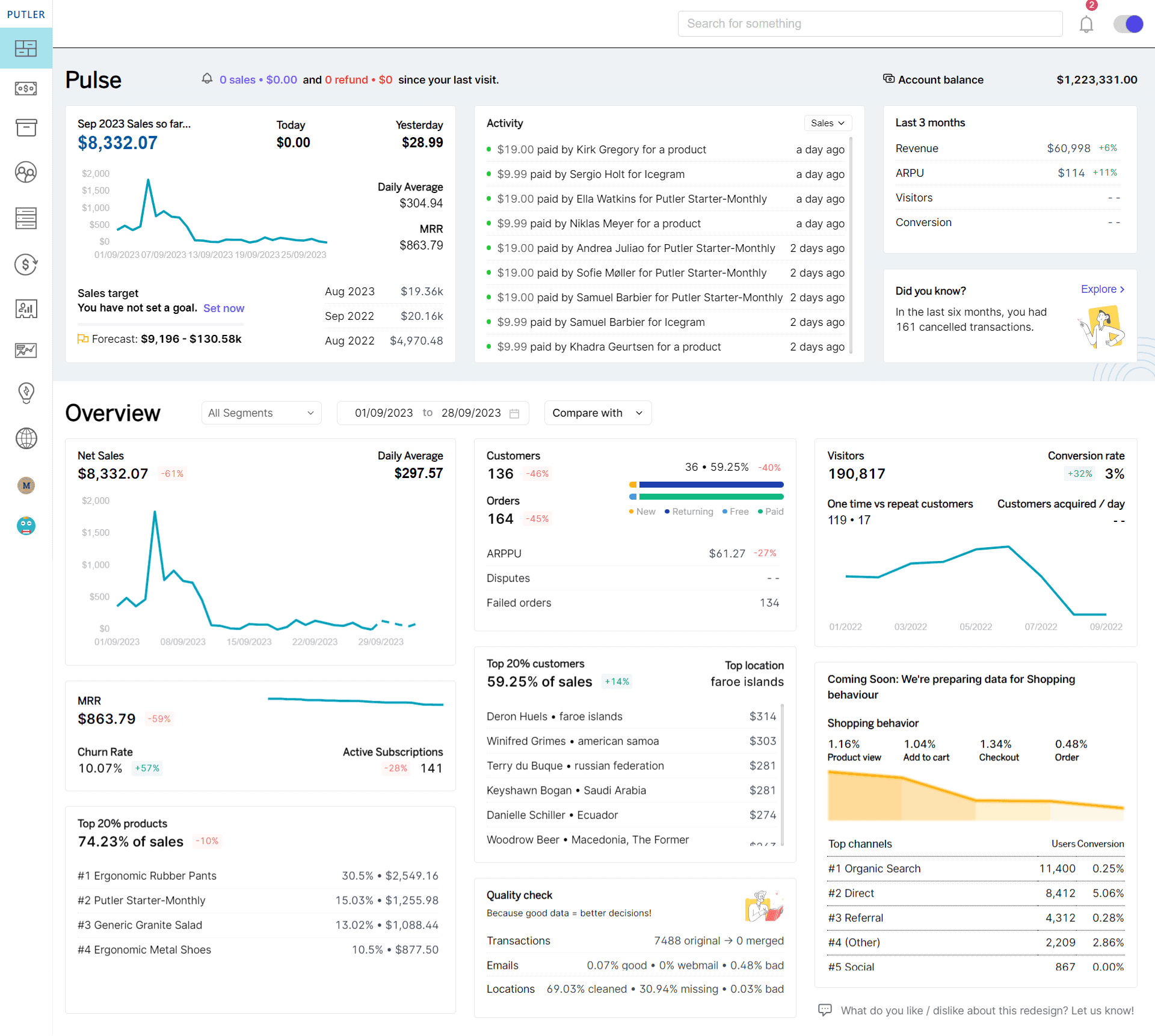
Managing your online store becomes super easy with Putler’s all-in-one dashboard.
Think of it as your control center. Here you can quickly see all the important data about your business and make informed decisions seamlessly.
Plus, Putler comes with dedicated dashboards for products, customers, sales, transactions, web analytics, and more.
Reports On Demand
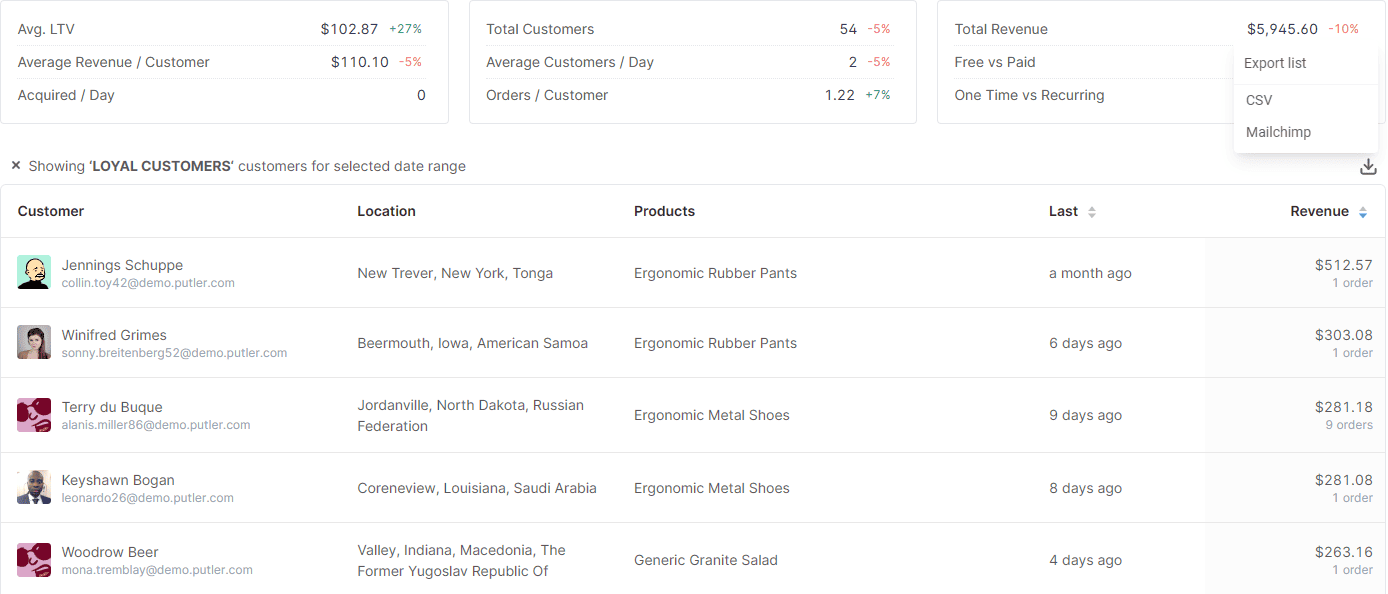
Putler makes it easy for eCommerce sellers to quickly access important reports for their online store.
With one click, you can easily download the reports you want from Putler. You can also set up preferred parameters and get super-customized CSV reports.
Also, when exporting a customer segment for your email marketing campaign, you can send the list directly to MailChimp or Icegram Express from Putler.
You can generate detailed Amazon order history reports to track purchasing patterns and identify your most valuable customers.
Easy Multi-Store Management
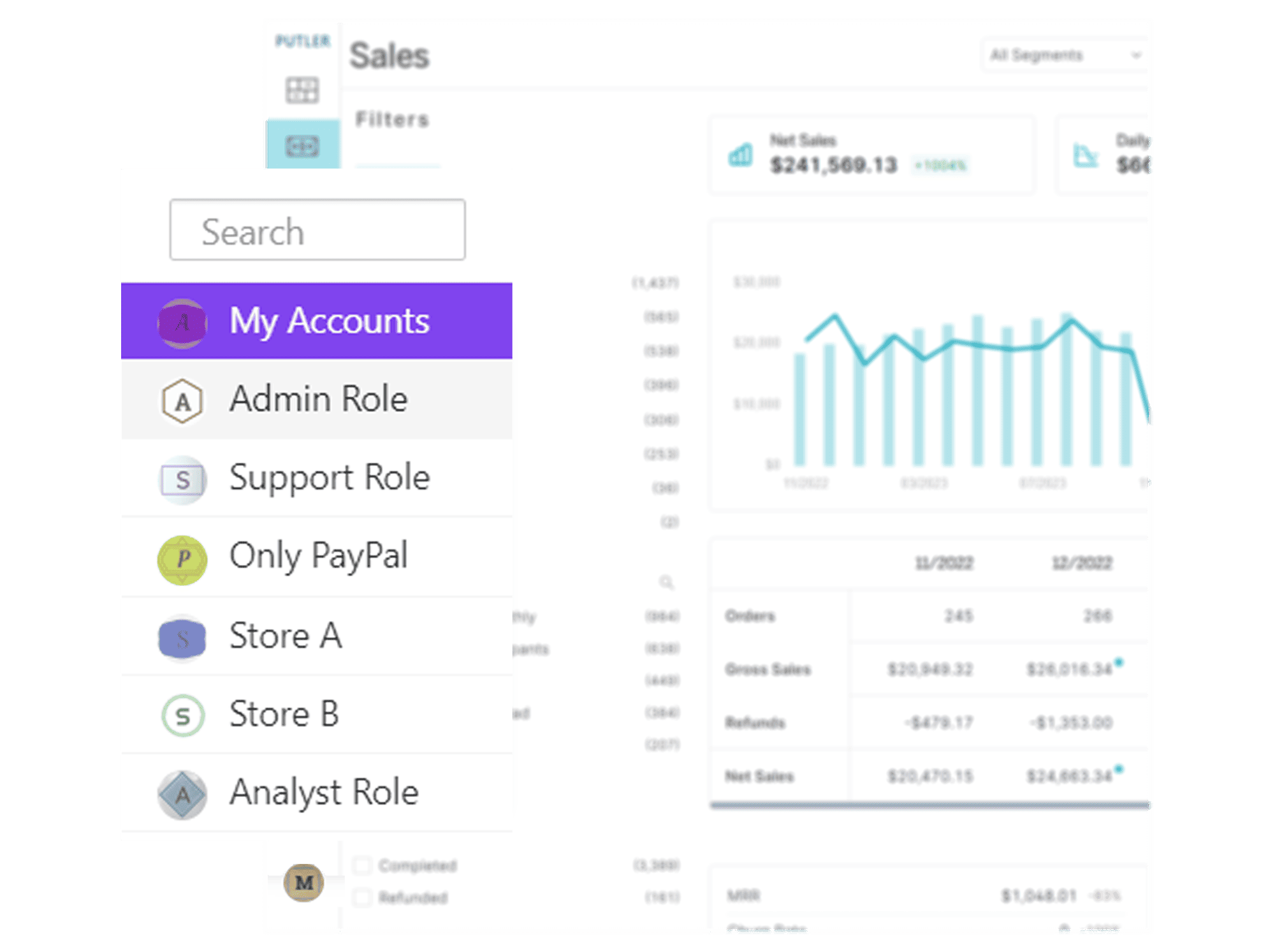
If you have multiple eCommerce stores, be it Shopify or Amazon, it’s a challenge to consolidate all the data. Plus, different platforms use different analytics, which can be complex and confusing.
With Putler, you no longer need to jump between different dashboards or struggle to keep track of your sales, orders, or customers.
It lets you centralize your data and seamlessly integrate all your stores into one unified platform. Moreover, you can also switch to individual stores for a more focused approach.
Instant Refunds
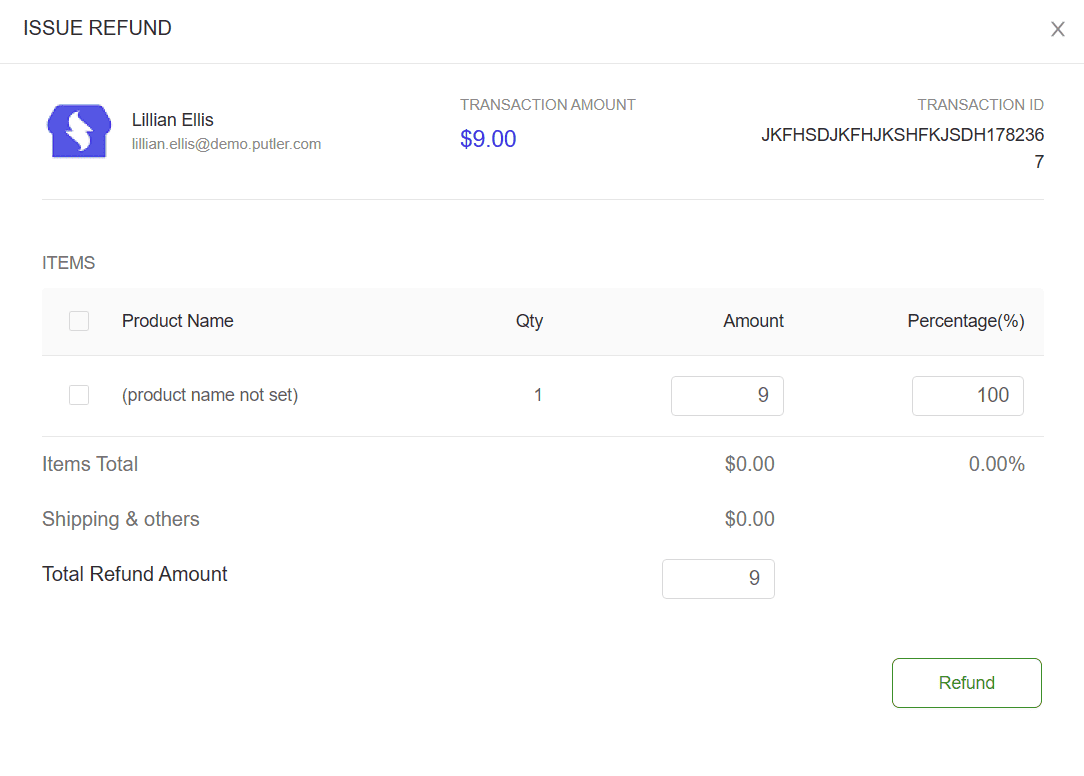
Dealing with refunds can be a hassle, but ensuring customers get their money back promptly and without any inconvenience is crucial.
With Putler, you can easily identify refund-seeking customers from Stripe, PayPal, or any other payment sources and process refunds securely in just two simple steps.
This not only saves you time and hassle, but also ensures a smoother return process and keeps your customers happy with Putler.
36+ Currency Support
Selling worldwide presents challenges, particularly when managing different currencies.
But with Putler, things are different.
Yes, Putler allows you to accept payments in over 36 currencies, including USD, EUR, GBP, AUD, CAD, Yen, and more.
Regardless of where your customers make payments, this tool automatically converts them to your preferred currency.
Undoubtedly, it’s the perfect tool for anyone looking to streamline their international business operations.
RFM Segmentation
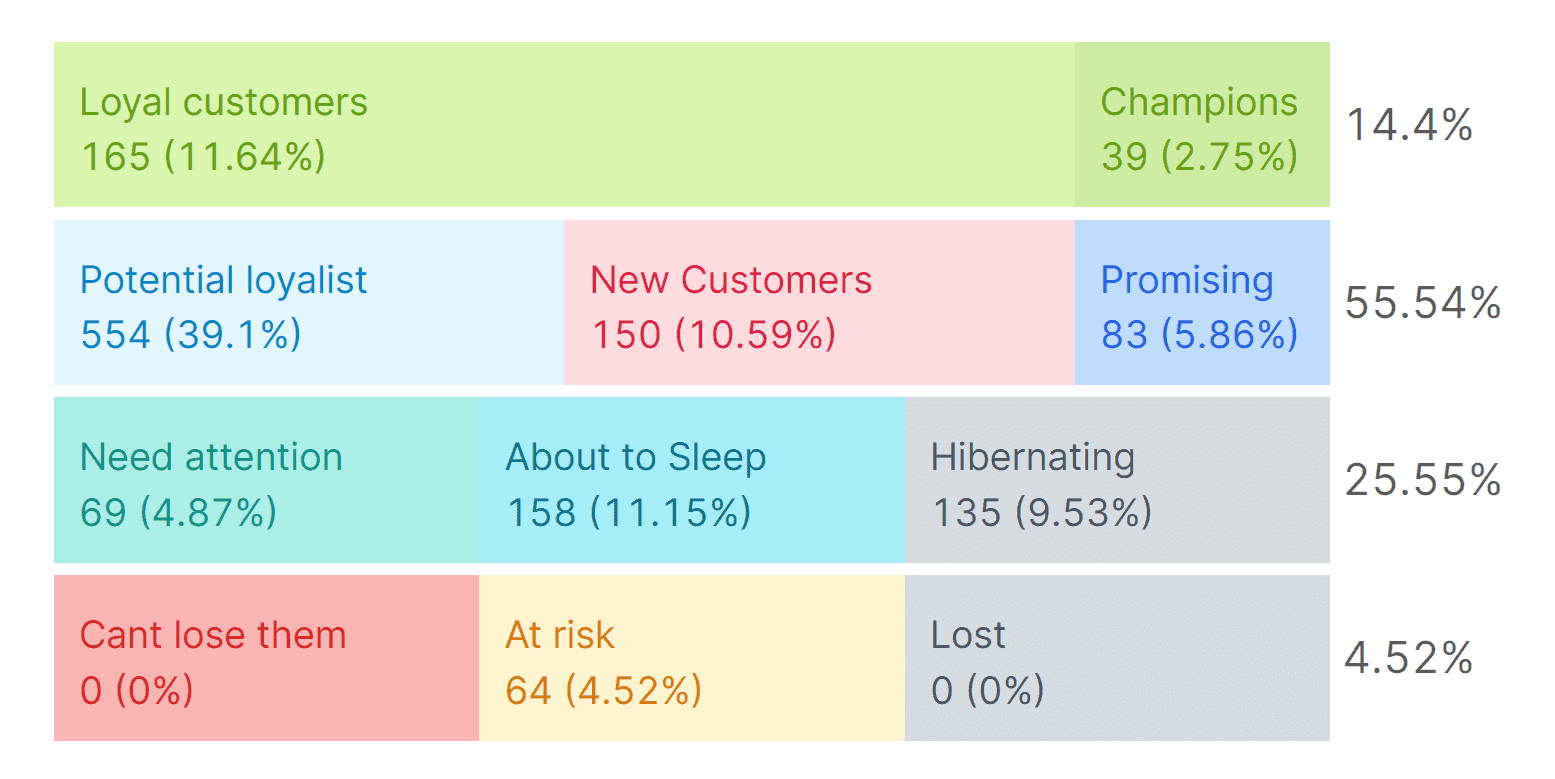
Recency, Frequency, and Monetary segmentation help you quickly identify customer segments. You can leverage these customer segments for more conversions.
Send targeted emails based on customer behavior – upsell and cross-sell to champions, welcome new customers, and retarget customers at risk.
Sales Heatmap
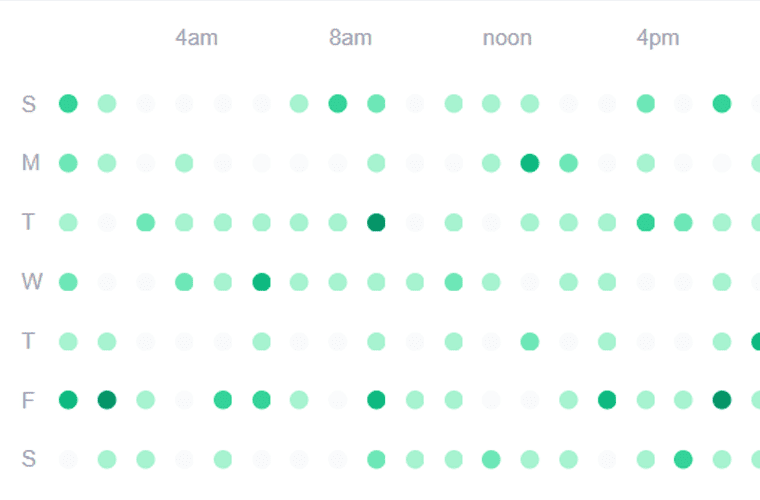
With a sales heat map, you can quickly identify when your customers are most active.
For example, if they are most active at noon on Sundays, you can tailor your marketing strategy to send emails and show discount pop-ups during the peak times.
Doing so can help you increase your conversions and drive more sales.
How Putler Enhances Reporting for Shopify
Shopify’s basic plan lacks advanced reporting features, including customer, order, and transactional reports. Product reports and exports are also limited.
To access these essential features, users are typically required to upgrade to a $300 advanced plan.
However, Putler offers an extensive array of reporting capabilities and more for just $20.
But that’s not all.
In addition to addressing the deficiencies of Shopify’s basic plan, Putler provides advanced filtering and RFM segmentation tools.
These features empower users to identify high-paying customers and those at risk of churn.
Moreover, while Shopify lacks SaaS metrics for deeper insights, Putler offers them.
And you can also track multiple stores simultaneously. So, that’s a bonus.
How Putler Enhances Reporting for Amazon
Fulfillment by Amazon (FBA) and Merchant Fulfilled Network (MFN) sellers face unequal access to reports on Amazon.
But with Putler, things are different.
Putler analyzes all Amazon transactions, offering thorough reports and insights to help sellers effectively monitor and grow their businesses.
Also, Amazon lacks crucial features, including customer and product reports, intuitive filters, and multi-account reporting.
These are essential for effective eCommerce management.
Moreover, capabilities like RFM customer segmentation, forecasting, performance comparison, and growth insights are absent.
Putler fills these gaps, empowering sellers to optimize their businesses comprehensively.
While Amazon’s native reporting has limitations, dedicated Amazon analytics tools can fill the gaps and provide deeper business insights.
Conclusion
Deciding between selling on Amazon vs Shopify for your online store is like choosing between controlling your ship or riding the wave of a giant ocean.
Both have their perks, but which suits your needs best? Consider factors like control, fees, and branding to make an informed decision.
But, irrespective of the platform you choose, Putler can enhance your reporting capabilities and streamline your operations.
So, choose the platform that sets your business on a path to success.
FAQs
What is the difference between Shopify and Amazon?
Both platforms, whether Shopify or Amazon, are like different stores in a big mall. Shopify gives you a shop where you can design everything the way you want.
It’s similar to having your store in a busy shopping street. On the other hand, Amazon is like a vast marketplace where lots of sellers come together to sell their products.
Can I sell the same product on Amazon and Shopify?
Yes, you can sell the same product on both Amazon and Shopify. It’s like having your product in different stores.
But remember, each platform has its own rules and fees. Also, think about how you want to present your product.
On Shopify, you can make it unique to your brand, while on Amazon, it’s listed alongside many other similar products.
Is Amazon or Shopify better?
The answer to Amazon vs Shopify depends on what you’re looking for. If you want more control over your store and brand, Shopify might be a better fit. It’s like having your shop where you set the rules.
But if you prefer the convenience of a large marketplace with many customers already there, then Amazon might suit you better.
Think about what’s essential for your business—control, customization, reach, and convenience.
Choosing between Shopify and Amazon FBA depends on your business goals. Shopify offers complete control over your brand and customer experience, while Amazon FBA provides access to a vast customer base and handles logistics. Both have their advantages, so consider your priorities and resources.