
Amazon vs Shopify isn’t a feature comparison. It’s a choice about who owns your customer.
Amazon gives you instant access to over 300 million buyers and takes 30 to 45% of each sale in fees. Shopify gives you a store you own, keeps your customer data in your hands, and charges a flat monthly fee plus payment processing. One rents you traffic. The other rents you infrastructure.
This article compares Amazon and Shopify on cost, control, fulfillment, and fit, with current 2026 fees. It also covers why most successful sellers stop treating this as an either-or decision.
Amazon vs Shopify: the core difference
The difference between Amazon and Shopify comes down to one question: do you want reach, or do you want ownership?
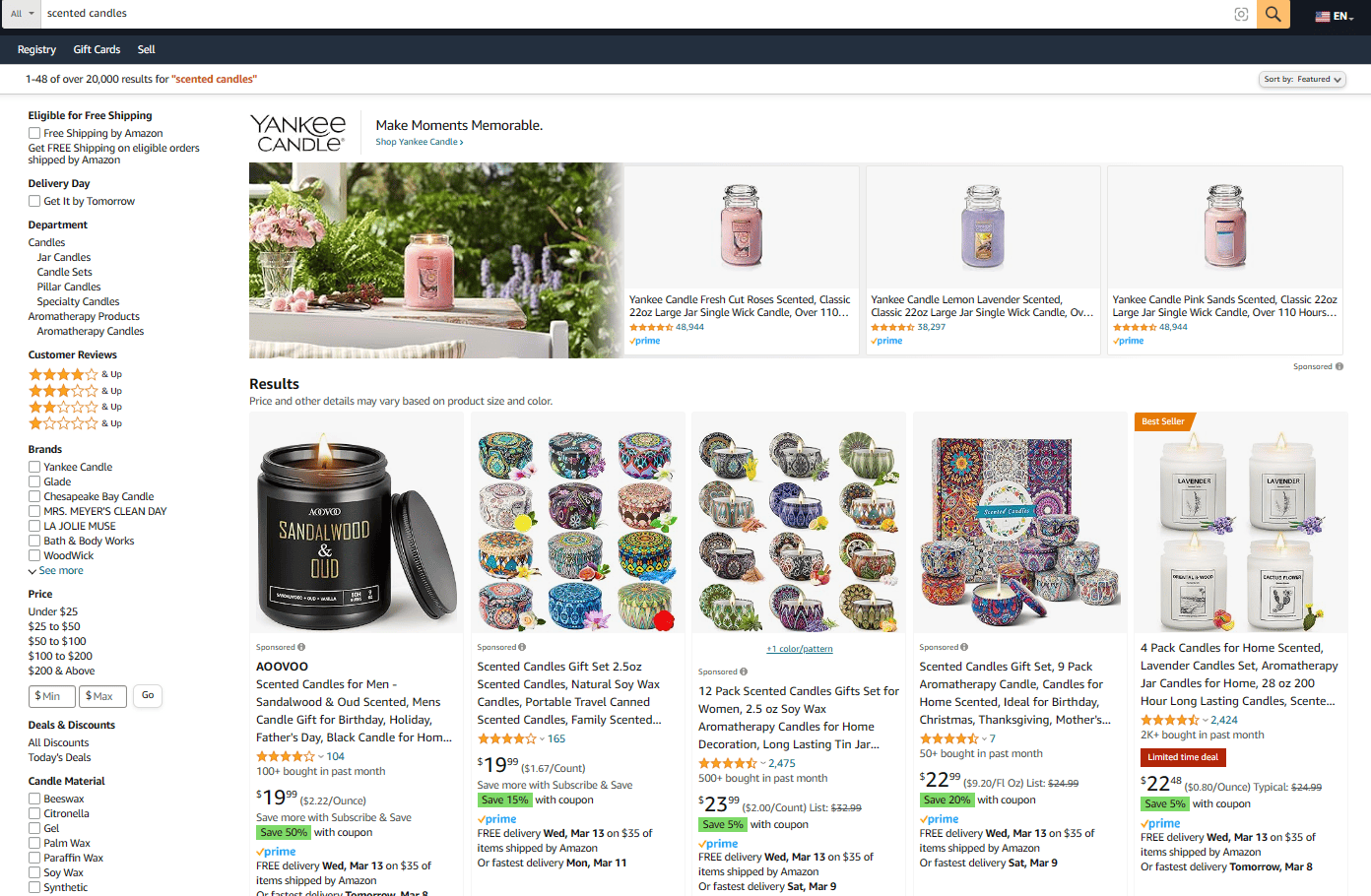
Amazon is a marketplace. You list your product alongside every competitor selling the same thing. A shopper searching “scented candles” sees your listing next to a dozen others, sorted by price, rating, and reviews. The traffic is already there. So is the competition.
Shopify is your own store. You get a standalone site with your branding, your rules, and your customer list. Nobody else’s products sit next to yours. But nobody arrives unless you bring them.
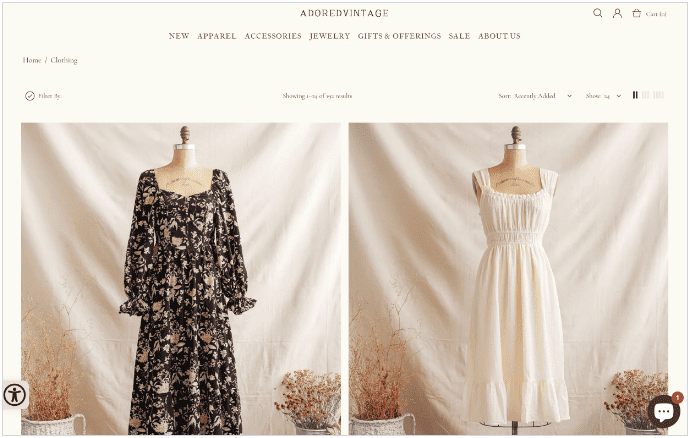
That single structural difference drives every other trade-off in this comparison:
- On Amazon, the customer belongs to Amazon. You can’t email them, retarget them, or build a relationship. Amazon owns the data.
- On Shopify, the customer belongs to you. Every email, order, and browsing behaviour is yours to use for remarketing, loyalty, and lifetime value.
- On Amazon, you compete on price and reviews inside a fixed template.
- On Shopify, you compete on brand, and you control the entire experience.
Amazon holds around 300 million active buyers, and roughly 69% of US product searches start on Amazon rather than Google. That reach is real. But reach you rent is not reach you own.
Amazon vs Shopify: pros and cons
The honest answer to which platform is better depends on what you’re optimizing for. Here’s what each one gives you and what it costs you.
Pros and cons of Amazon
Amazon has enormous sales potential, and a review section that can sink a product overnight. Both are true at once.
Pros:
- Built-in traffic: over 300 million active buyers, most arriving ready to purchase
- Prime shipping: free two-day delivery that lifts conversion before you do anything
- FBA handles logistics: Amazon picks, packs, ships, and manages returns and customer service
- Instant trust: Amazon’s reputation converts first-time buyers who’ve never heard of you
- Fast to launch: no website, no design, no traffic strategy needed to make a first sale
Cons:
- Fees stack up fast: referral, fulfillment, storage, and the newer 2026 surcharges can reach 30 to 45% of each sale
- You don’t own the customer: no emails, no retargeting, no direct relationship
- Brutal competition: your listing sits beside identical products competing on price
- Almost no branding: a fixed template with little room to stand out
- Platform risk: an account suspension can end your business with no warning
Pros and cons of Shopify
Shopify hands you hosting, security, and payments in one subscription. It also hands you the job of finding every visitor yourself.
Pros:
- You own the brand: full control over design, pricing, and the customer experience
- You own the data: every customer email and order is yours for marketing and lifetime value
- Predictable cost: a flat monthly fee instead of a percentage of every sale
- Higher margins: no referral fees means you keep more of each transaction
- Sell everywhere: your site plus Instagram, TikTok, Facebook, and even Amazon through Shopify’s channels
Cons:
- You bring the traffic: nobody visits by default, so SEO, ads, and content are on you
- Third-party payment fee: 0.6 to 2% unless you use Shopify Payments
- Fulfillment is your problem: you handle it yourself or wire up a third-party logistics partner
- Slower to first sale: building an audience takes longer than listing on a marketplace
Selling on Amazon vs Shopify: how to choose
Four factors decide which platform fits: your product, your brand, your true cost, and your fulfillment. Work through them in order.
Product type
What you sell narrows the choice fast.
- Handmade, custom, or private-label goods favour Shopify, where lifestyle imagery and brand storytelling do the selling.
- Commodity products with existing demand like phone cases, kitchen gadgets, and fitness accessories favour Amazon, where buyers are already searching.
- Products that need explaining favour Shopify, since Amazon’s fixed template gives you little room to educate.
Existing brand
If you’ve built a brand, Shopify protects it. Your store, your design, your customer experience, with no competitor listings beside yours.
If you’re starting cold with no audience, Amazon’s marketplace gives you exposure you’d otherwise spend months building. The trade is visibility now for control later.
Fees and pricing in 2026
This is where the real cost lives, and where most sellers underestimate Amazon.
Amazon’s fee stack in 2026:
- Account: $39.99/month for the Professional plan, or $0.99 per item on the Individual plan
- Referral fee: 8 to 15% of each sale, 15% for most categories
- FBA fulfillment: $3.22 to $10+ per unit by size and weight
- Storage: $0.78 to $2.40 per cubic foot monthly, roughly 3x higher in Q4
- Inbound placement fee: $0.21 to $1.58 per unit, a newer cost many sellers miss
- Low-inventory-level fee: charged when stock drops below 28 days of supply
- Aged-inventory surcharge: on inventory sitting 181+ days
- Fuel and logistics surcharge: 3.5% of the fulfillment fee, effective April 2026
Stacked together, Amazon’s fees typically consume 30 to 45% of a product’s selling price.
Shopify’s fee structure in 2026:
- Starter: $5/month, for selling through social and messaging only
- Basic: $39/month ($29 annual), full store, 2% third-party transaction fee
- Grow (formerly “Shopify”): $105/month, 1% third-party fee, 5 staff accounts
- Advanced: $399/month, 0.6% third-party fee, advanced reports, 15 staff accounts
- Plus: from $2,300/month for enterprise volume
Card processing with Shopify Payments runs 2.9% + 30¢ on Basic, 2.7% on Grow, and 2.5% on Advanced for online sales. In-person rates are lower. Using Shopify Payments removes the third-party transaction fee entirely.
The comparison that matters: on $1 million in revenue, Amazon’s fees run roughly $150,000 to $450,000. The same revenue on Shopify costs roughly $29,000 in platform and processing fees, before the marketing you’ll spend to drive traffic. That gap is the price of Amazon’s built-in reach.
Fulfillment
Shopify offers no fulfillment of its own. You ship orders yourself or connect a third-party logistics partner through an app.
Amazon’s FBA handles picking, packing, shipping, returns, and customer service. It’s a real convenience, and the fee stack above is what that convenience costs.
The decision reduces to a trade: FBA buys back your time at the price of your margin. Self-fulfillment on Shopify protects your margin at the price of your time.
Shopify vs Amazon: quick comparison
Here’s the full comparison at a glance.
| Factor | Amazon | Shopify |
|---|---|---|
| Model | Marketplace | Your own store |
| Store ownership | None, you rent space | You own it |
| Traffic | Built in, 300M+ buyers | You drive it |
| Customer data | Amazon owns it | You own it |
| Brand control | Fixed template | Full control |
| Fees | 30 to 45% of each sale | Flat plan plus 0.6 to 2% |
| Fulfillment | FBA handles it | You or a 3PL |
| Setup speed | Sell within days | Slower, build first |
| Best for | Fast validation, commodity products | Brand building, owned customers |
The pattern is consistent: Amazon trades control for reach, Shopify trades reach for control.
Which platform suits your business type?
Different business models thrive on different platforms. Here’s the guide.
Choose Amazon if:
- You sell commodity products with existing demand, like phone cases, kitchen gadgets, or fitness accessories
- You want to start selling fast without building a website
- You’d rather outsource fulfillment and customer service
- You’re testing product ideas and need quick market validation
- You have no marketing budget or expertise to drive your own traffic
Choose Shopify if:
- You sell unique, handmade, or private-label products
- Building a recognizable brand is the priority
- You want direct access to customer data and email lists
- You have marketing skills or a budget for paid ads and content
- You plan to sell internationally with full control over pricing
Choose both if:
- You have an established brand and want maximum reach
- You want to acquire customers on Amazon and build lasting relationships on Shopify
- Your products appeal to both marketplace shoppers and brand-loyal buyers
- You’re past roughly $500K a year and want to reduce dependence on any single platform
That last option is where most successful sellers land. Amazon for reach and fast validation, Shopify for the customer relationship and margin. The 2026 consensus across the industry is the same: the strongest operators stop picking one and run both, using Amazon as the accelerant and Shopify as the base.
Shopify even makes it native. Its Amazon sales channel lets you list on Amazon from your Shopify admin, sync inventory across both, and manage orders in one place.
For sellers comparing Amazon with other marketplaces, the Amazon vs eBay guide covers additional ground.
Selling on Shopify vs Amazon: managing both at once
Once you sell on both platforms, a new problem appears: your numbers live in two places that don’t talk to each other.
Amazon reports Amazon sales. Shopify reports Shopify sales. Neither shows combined revenue, blended margin, or which customers bought from both. To see the whole business, you export two sets of reports and reconcile them by hand, usually in a spreadsheet, usually late.
That’s the gap Putler closes.
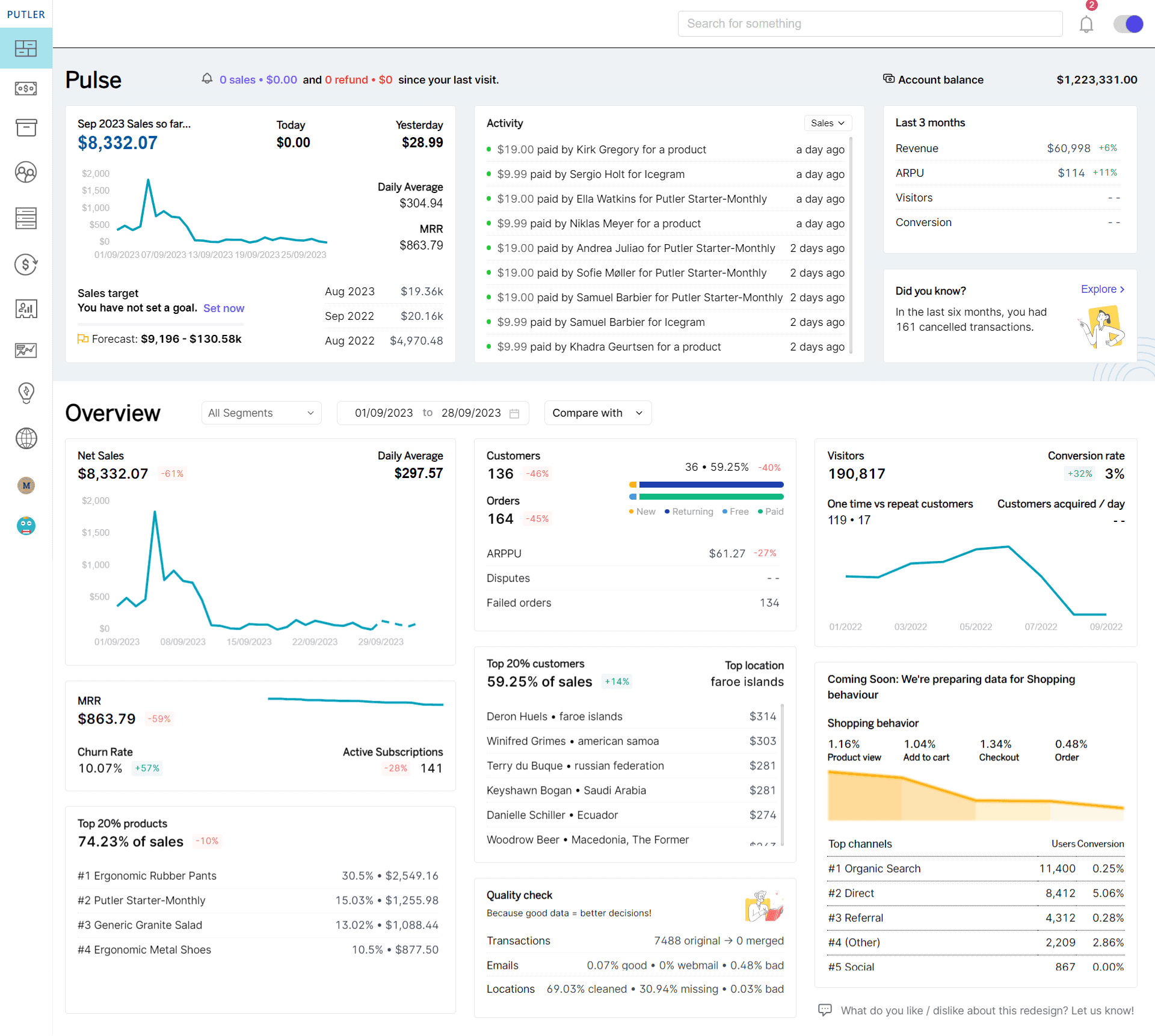
Putler is an eCommerce analytics tool that pulls sales, customer, product, and transaction data from Amazon, Shopify, payment gateways, and other channels into one dashboard. Duplicate records across sources merge automatically, so revenue isn’t counted twice.
What that gives a seller running both:
- One revenue figure: combined across Amazon and Shopify, or filtered to either
- True blended margin: after Amazon’s 30 to 45% fee stack and Shopify’s flat cost, side by side
- Customer segmentation: RFM analysis showing your best and lapsing customers across both platforms
- Product performance: which products sell where, and which drive repeat purchases
- Forecasting: revenue and customer projections built on combined history
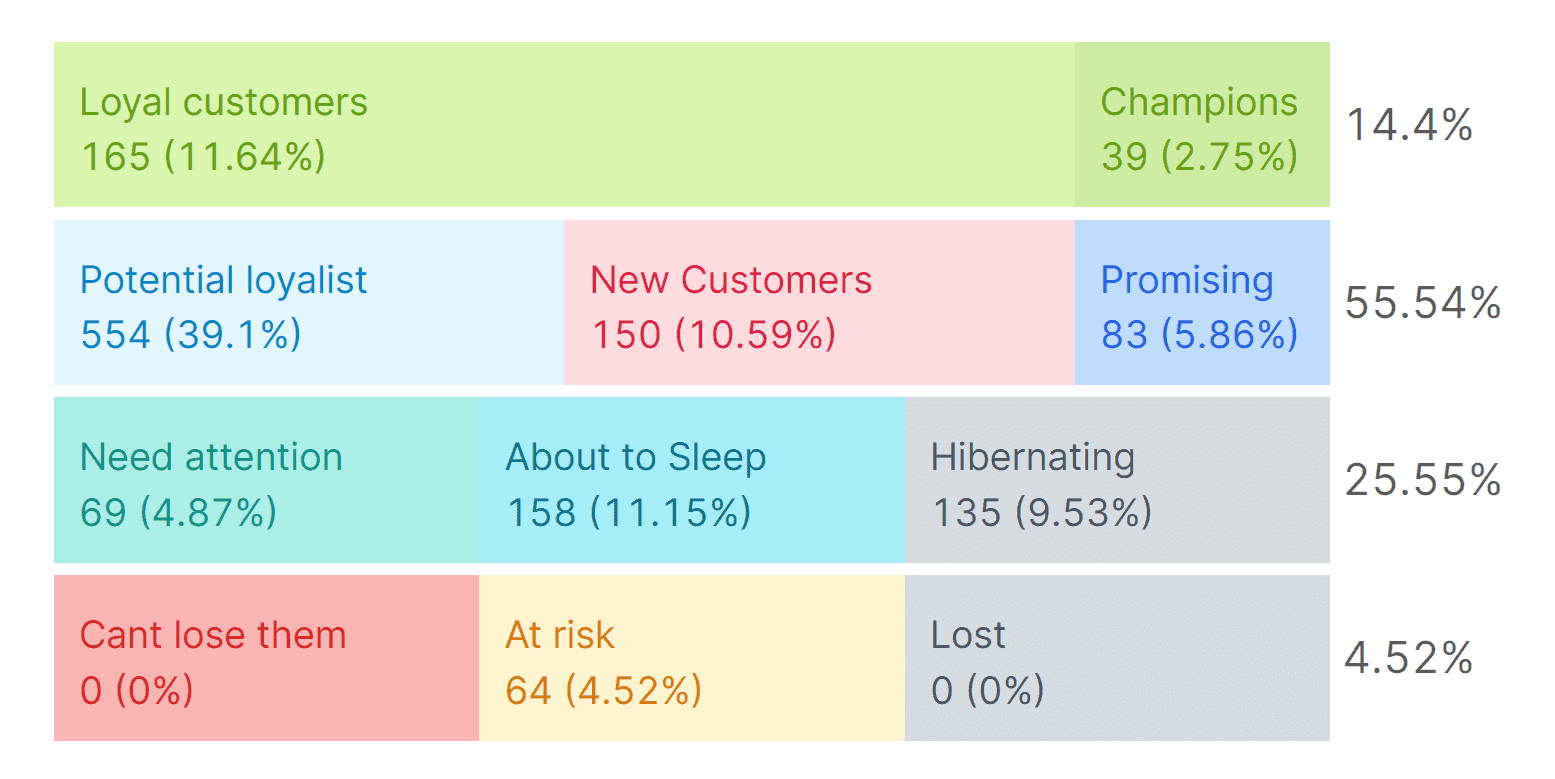
Putler doesn’t replace Seller Central or the Shopify admin. It sits on top and answers the one question neither platform can: how is the whole business actually doing?
FAQs
Is Amazon or Shopify better for selling online?
Neither is better outright. Amazon suits sellers who want built-in traffic and fast validation and can absorb fees of 30 to 45% per sale. Shopify suits sellers who want to own their brand, customer data, and margins but must drive their own traffic. Many sellers use both.
Is it cheaper to sell on Amazon or Shopify?
Shopify is cheaper per sale. Amazon’s referral, fulfillment, storage, and 2026 surcharge fees run 30 to 45% of the selling price. Shopify charges a flat monthly plan from $39 plus payment processing of around 2.9%. On $1 million in revenue, Amazon fees run roughly $150,000 to $450,000 against Shopify’s roughly $29,000, before marketing spend.
Can I sell on both Amazon and Shopify?
Yes, and most established sellers do. Shopify’s native Amazon sales channel lets you list on Amazon from your Shopify admin, sync inventory, and manage orders in one place. The common strategy is Amazon for reach and Shopify for the owned customer relationship.
Does Amazon or Shopify give me customer data?
Shopify gives you full access to customer emails, order history, and behaviour for marketing and remarketing. Amazon keeps that data, so you can’t build a direct relationship with buyers who purchase through the marketplace.
What are Amazon’s fees in 2026?
Amazon charges a $39.99 monthly Professional plan, referral fees of 8 to 15%, FBA fulfillment of $3.22 to $10+ per unit, storage fees, plus newer inbound placement, low-inventory, and aged-inventory fees, and a 3.5% fuel surcharge. Combined, these typically reach 30 to 45% of the selling price.
Which is better for beginners?
Amazon is usually faster for beginners with no audience, because the traffic is already there and FBA handles fulfillment. Shopify suits beginners who have an audience or a distinct brand and want to build on ground they own.
Do I need a website to sell on Amazon?
No. Amazon provides the storefront, so you can start selling without a website. Shopify requires you to build a store, which takes longer but gives you full control.
Amazon vs Shopify: the honest verdict
Shopify or Amazon is the wrong way to frame it for most sellers. Amazon rents you reach. Shopify sells you ownership. The right choice depends on whether you need buyers today or a business you control tomorrow.
For most sellers, the answer stops being one platform. Use Amazon to reach buyers who are already searching, use Shopify to turn them into customers who are yours, and measure the combined result in one place.
- How to increase sales on Amazon: proven tactics for marketplace sellers
- Shopify marketing strategy: drive traffic to your owned store
- Multiple Shopify stores: manage several shops from one place
- Best Amazon analytics tools: track and grow your marketplace sales
- Export Amazon order history: pull your order data for analysis
Choosing between Shopify and Amazon FBA depends on your business goals. Shopify offers complete control over your brand and customer experience, while Amazon FBA provides access to a vast customer base and handles logistics. Both have their advantages, so consider your priorities and resources.