

Metrilo is an ecommerce analytics, CRM, and email marketing platform built for direct-to-consumer brands. This Metrilo review covers what the tool does well, where it falls short, what it costs in 2026, and how it compares to Putler for sellers who need more than one store in view.
One fact up front that shapes the whole picture: Metrilo has joined forces with Brevo. The product still runs and still sells, but it now sits inside the Brevo group, which matters if you are betting a few years of analytics on it.
This article walks through Metrilo’s platform fit, integrations, dashboards, and pricing, then lays out the honest case for a Metrilo alternative when your business outgrows a single storefront. It doubles as a Metrilo comparison against Putler, drawing on what current Metrilo reviews say about the tool’s strengths and limits.
Metrilo review: who the platform is built for
Metrilo is built for one type of business: direct-to-consumer ecommerce brands running on Shopify, WooCommerce, or Magento. It combines analytics, an ecommerce CRM, and email automation in one tool, and it does that combination well for a single online store.
The narrower fit is the thing to know before you commit. Metrilo serves ecommerce, and specifically DTC ecommerce. If your business runs on subscriptions, spans multiple stores, or sells across channels like Amazon and Etsy alongside your own site, the fit gets looser fast.
Putler, the Metrilo alternative covered later in this review, takes a wider approach. It supports ecommerce and subscription businesses, and pulls data from more than one store or channel into a single view.
Metrilo vs Putler: integrations and setup
Integrations decide how much of your business a tool can actually see. If your data lives in five places and the tool reads two of them, you are back to spreadsheets for the rest.
Metrilo integrations
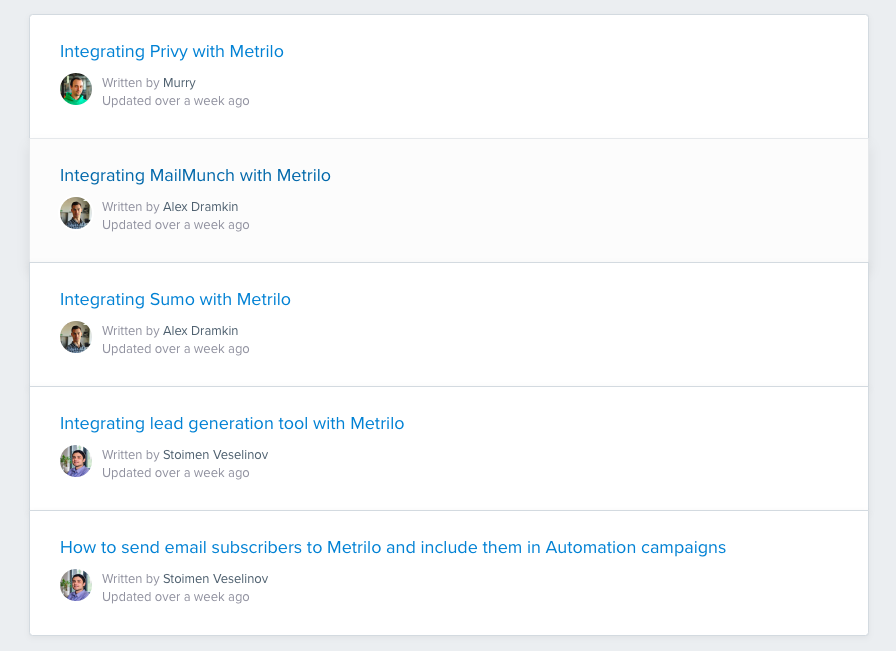
The Metrilo Shopify plugin is one-click, and Metrilo connects the same way through official plugins for WooCommerce and Magento (Adobe Commerce). Setup is quick, and order statuses sync in real time for accurate revenue. The trade-off is a smaller ecosystem. Metrilo focuses on storefront platforms and its own CRM and email tools, not a broad web of payment gateways and third-party services.
Putler integrations
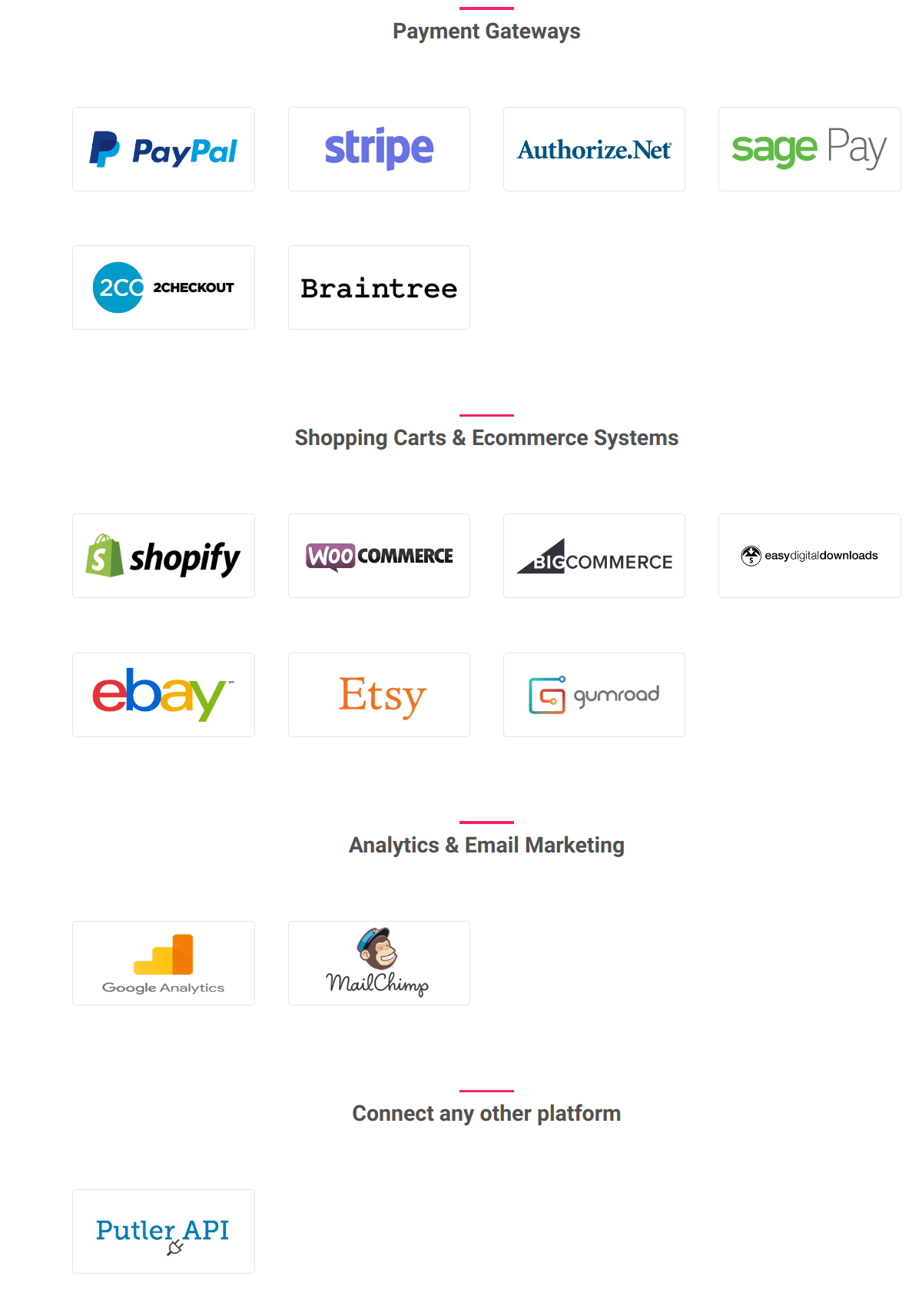
Putler connects with 17+ services: a mix of payment gateways, shopping carts, email service providers, and Google Analytics. That range is the point. Where Metrilo reads your store, Putler reads your store, your other store, your gateways, and your traffic, then combines them.
Metrilo dashboard: features and reports
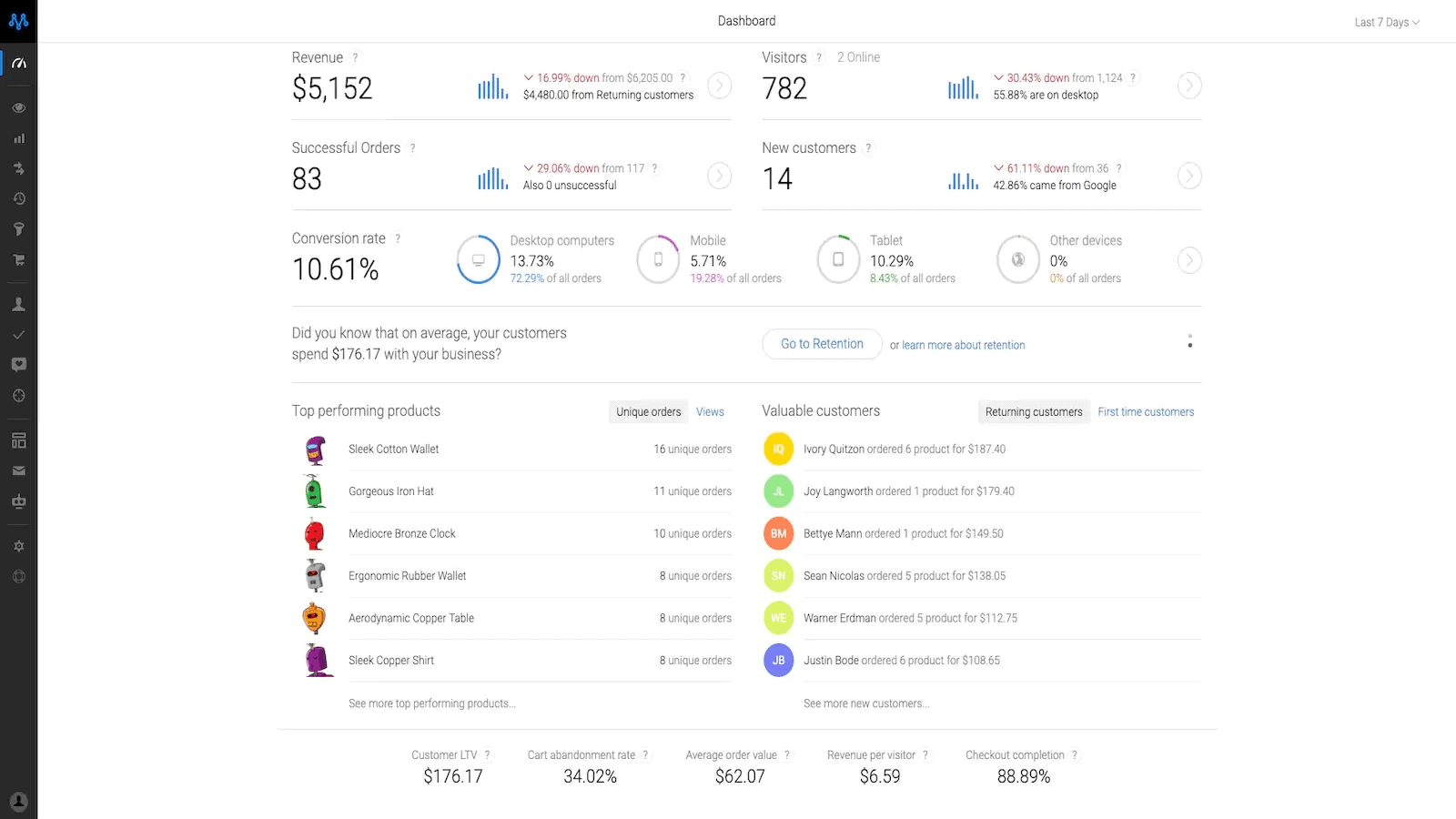
Metrilo’s dashboard is clean and built for people who are not data scientists. It surfaces the core ecommerce metrics without setup, which is one of the most praised things about the tool in user reviews.
Metrilo’s dashboards
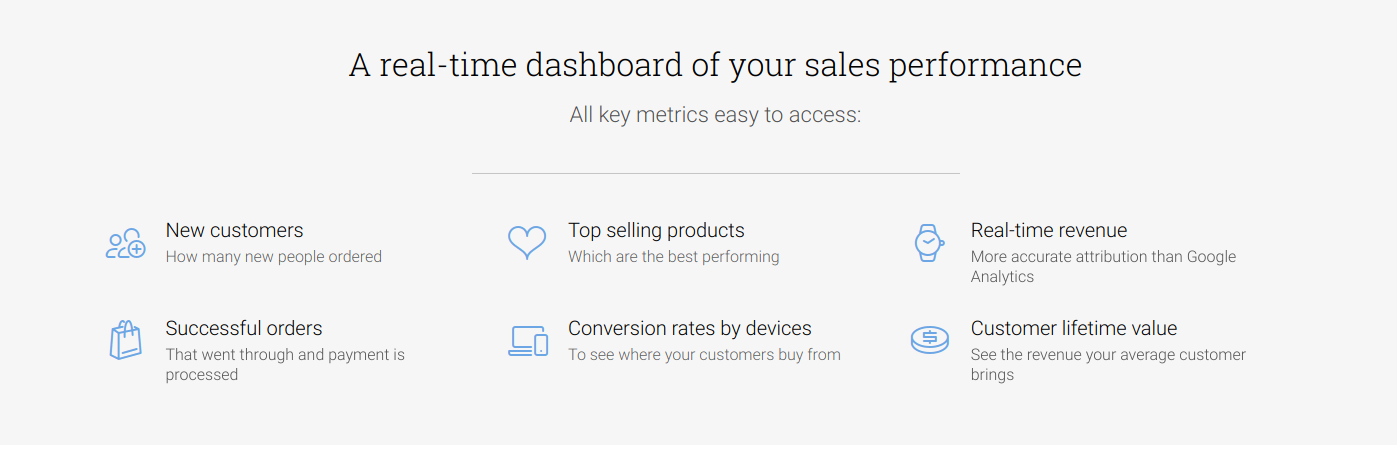
The Metrilo dashboard covers the metrics most stores check daily:
- New customers: tracks acquisition so you can see growth at a glance.
- Top selling products: helps you plan inventory and promotions.
- Real-time revenue: one of the most-watched metrics for performance.
- Successful orders: a read on how your checkout is performing.
- Conversion rates by device: shows where your buyers actually come from.
- Customer Lifetime Value: helps you find retention gaps and act on them.
One of Metrilo’s standout features is its correlation reports. They show which products get ordered together or instead of each other, which surfaces real product development and bundling opportunities.
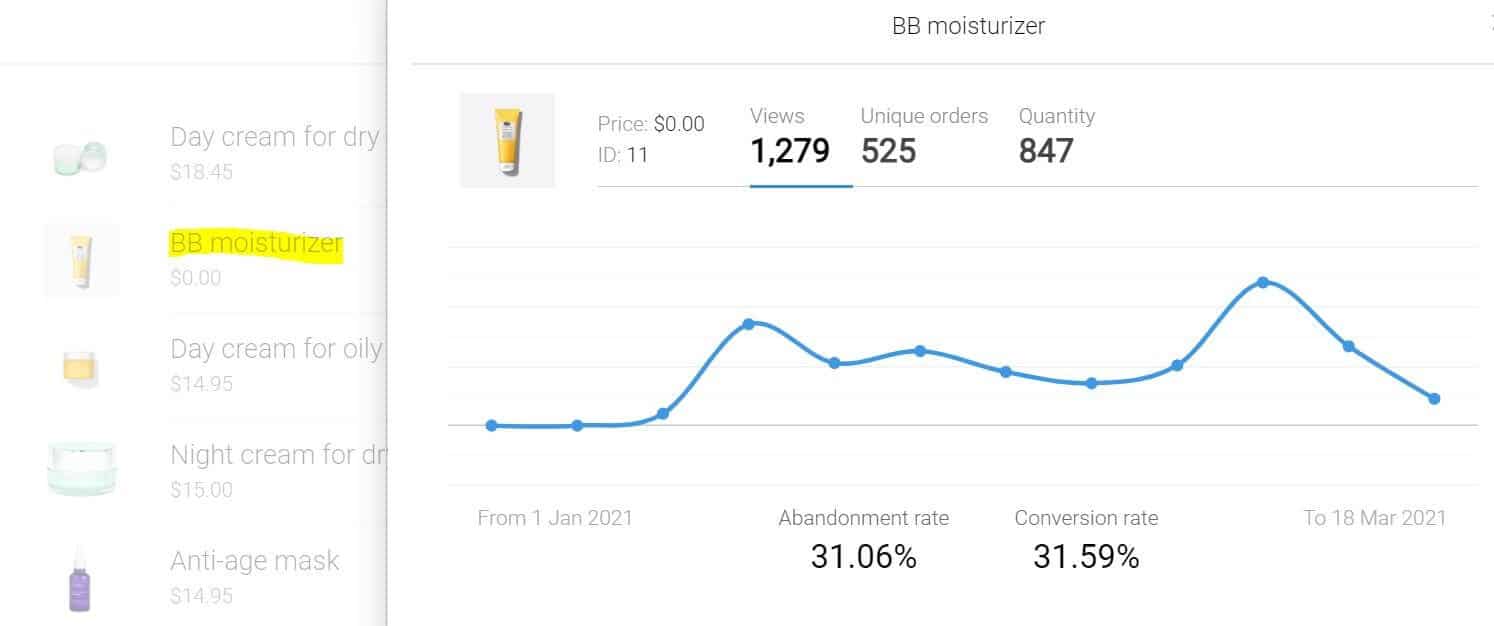
Metrilo also has pre-set funnel reports that measure key conversion steps automatically. You do not set goals manually. You just find the leaks and fix them.
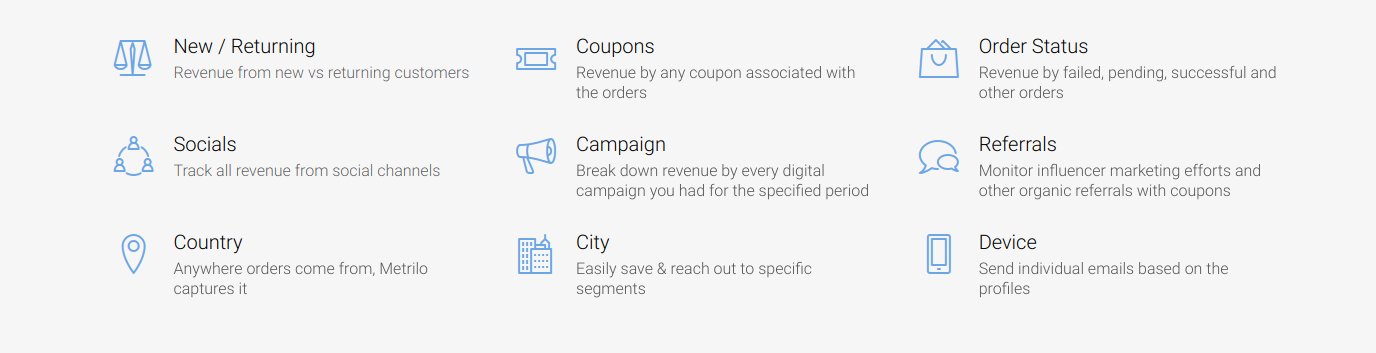
For a single DTC store, that feature set is strong. The limit shows up when you need a 360-degree view across more than one revenue source, which is where Putler comes in.
Putler’s dashboards
Putler contains 9 dashboards that cover over 150 metrics and KPIs across different functions of your business.
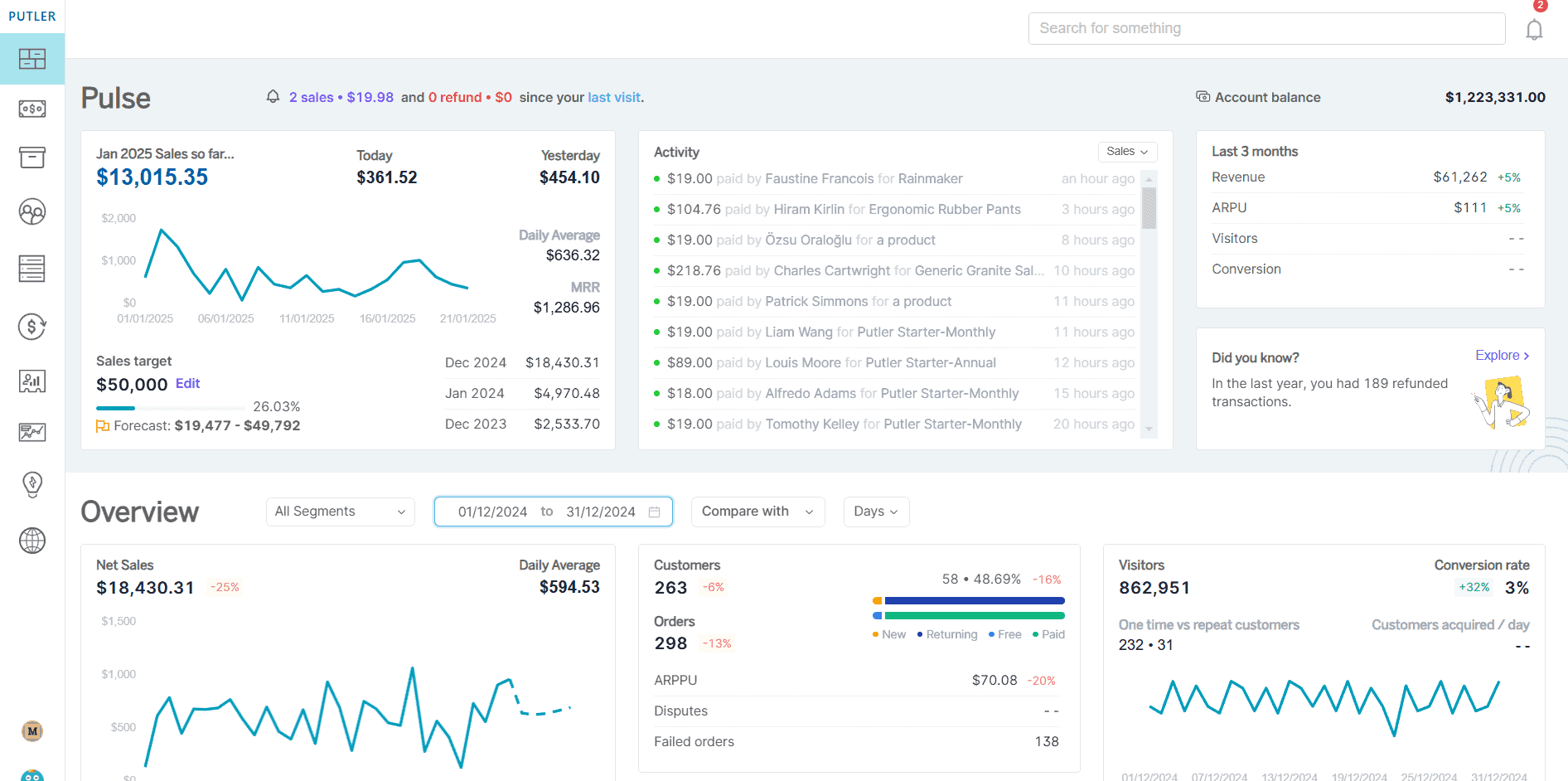
Home dashboard: the one-stop overview. It displays a synopsis of the entire business on one screen.
Sales dashboard: the metric most businesses live by. Net sales, refunds, average revenue per day, and average revenue per sale are all here, with in-depth information on every sale including the invoice. You can export the sales list as a CSV for further analysis.
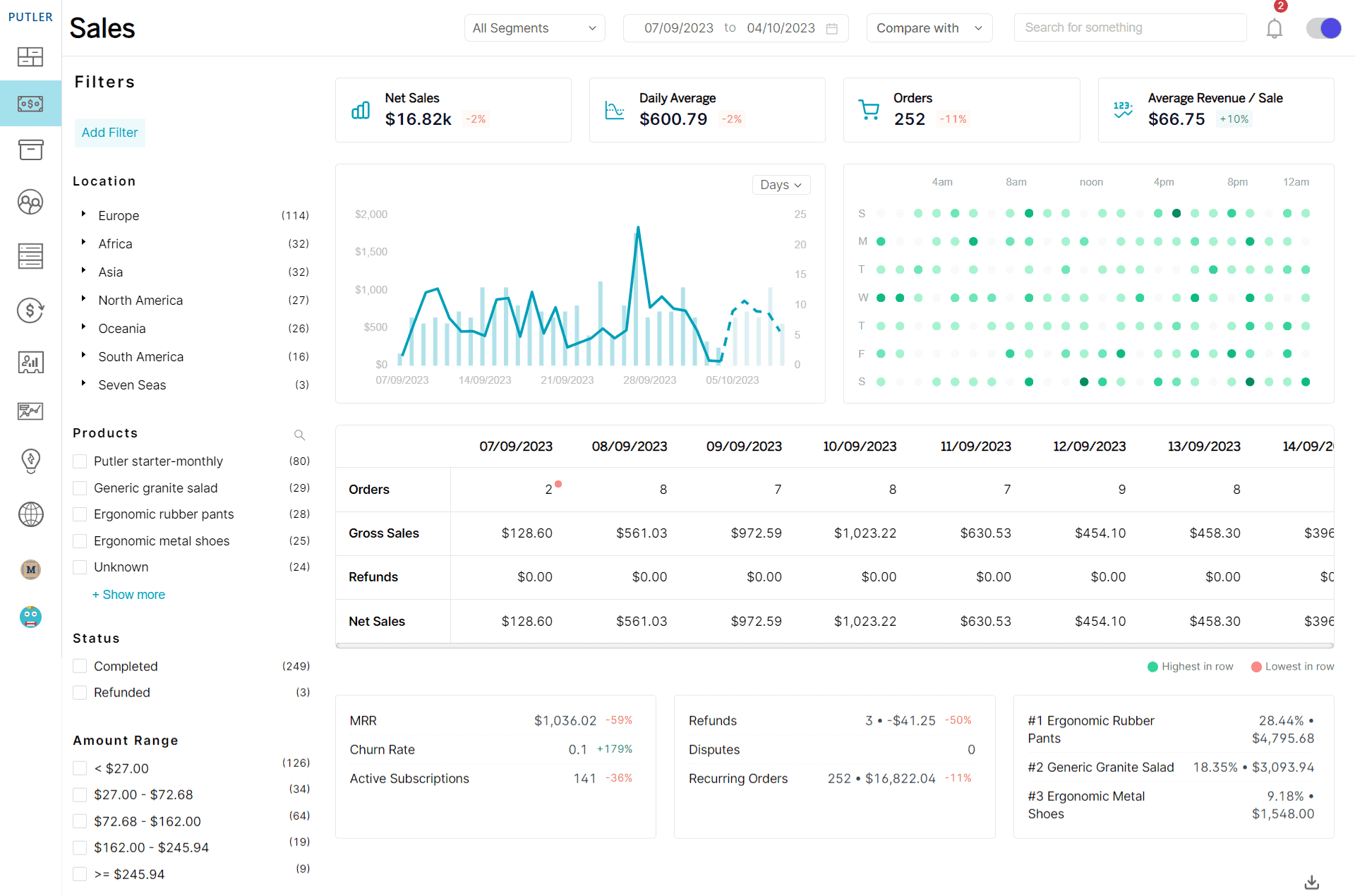
One feature few others offer is the Sales Heatmap. Putler tracks all sales activity and maps the best and worst sales periods, which you can use to plan flash sales and live chat hours.
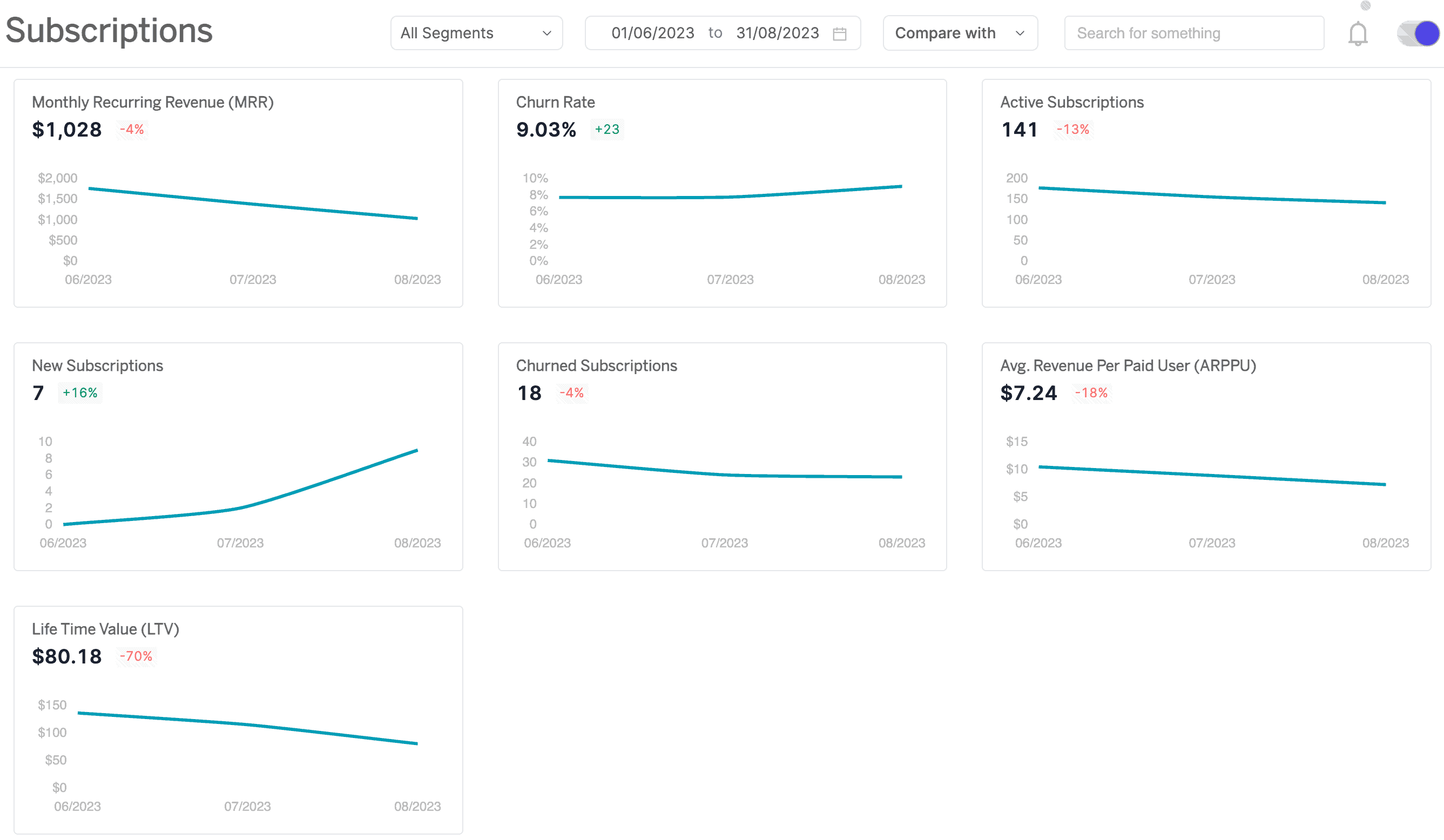
Subscriptions dashboard: built for SaaS and subscription businesses. It gives you SaaS metrics like ARR, MRR, churn, and LTV. This is the piece Metrilo does not cover.
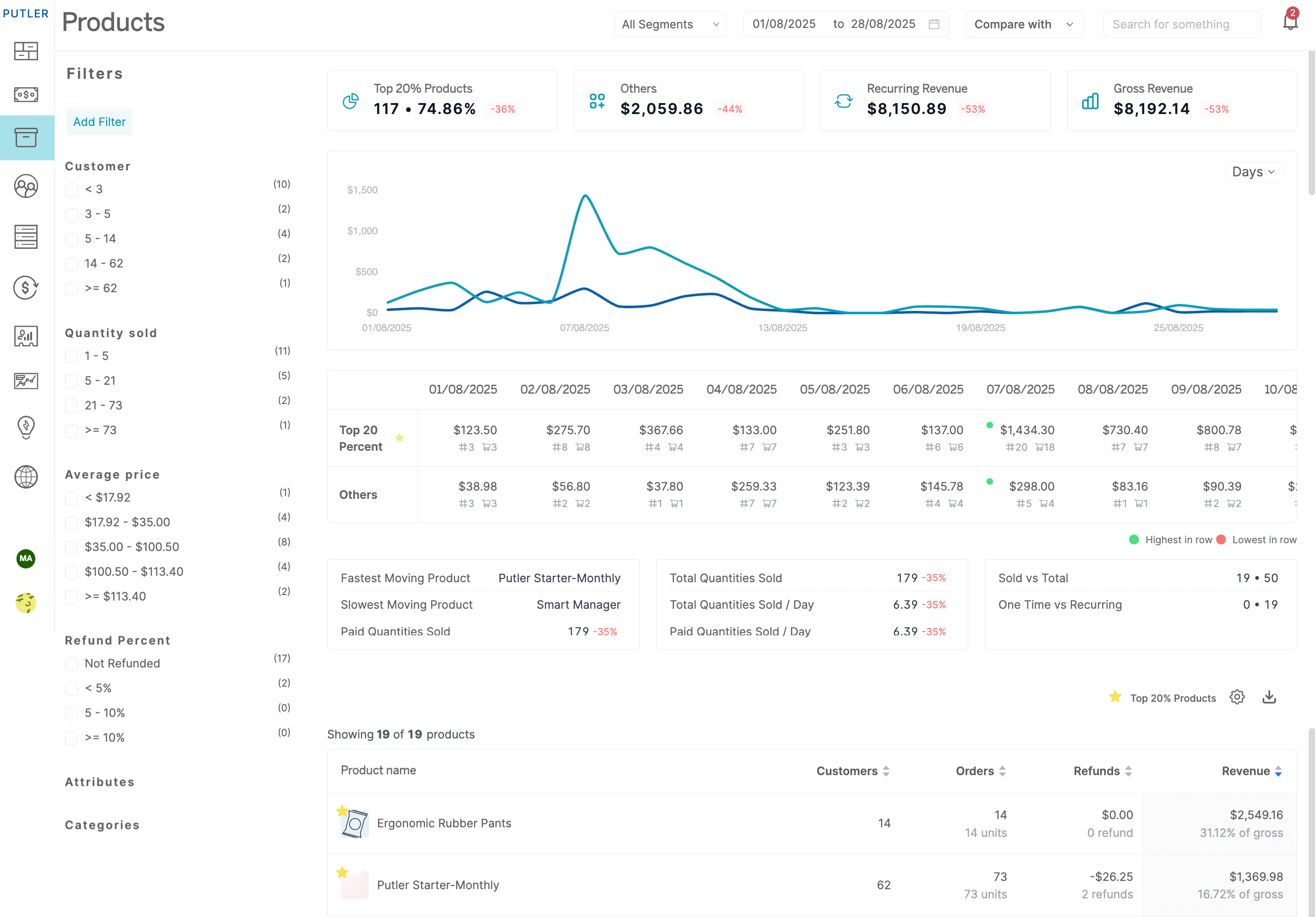
Products dashboard: reports on every product’s performance, with individual product detail like sales history, who bought it, and items bought together.
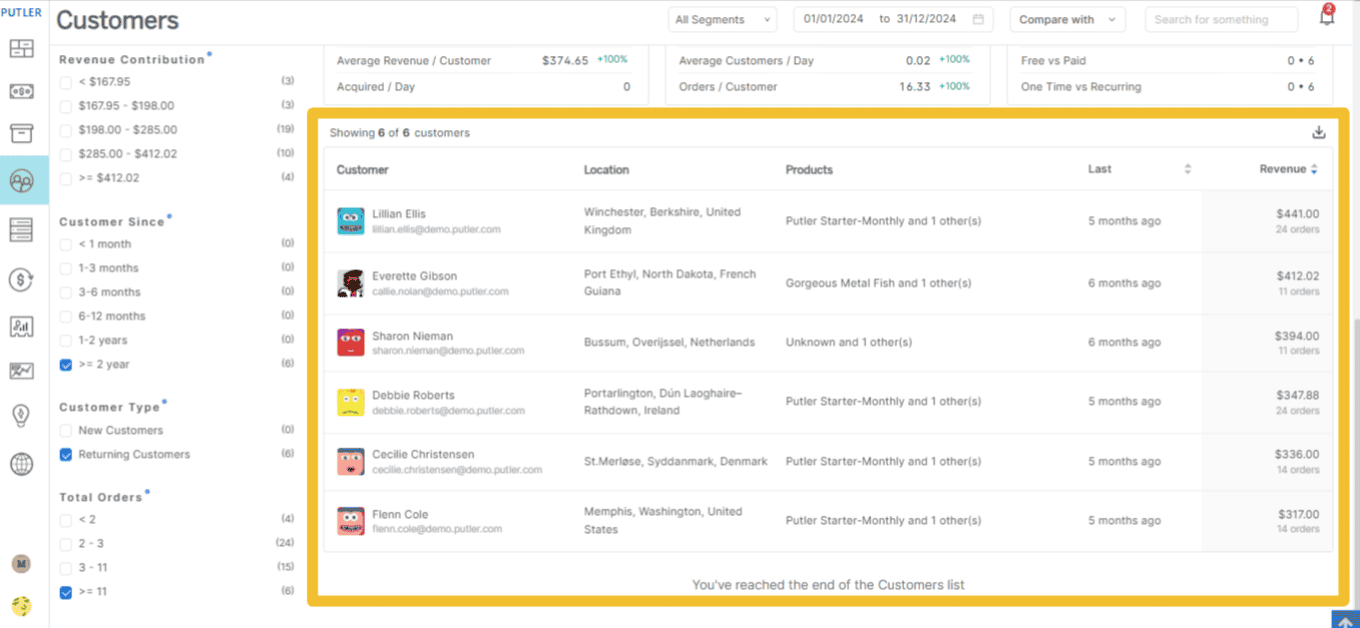
Customer dashboard: detailed customer insights built on the RFM model (Recency, Frequency, Monetary), a proven approach to behavior-based customer segmentation. It clusters customers by what, how, and when they buy, so you can spot who is most likely to respond to an offer. You can read more on RFM analysis for customer segmentation.
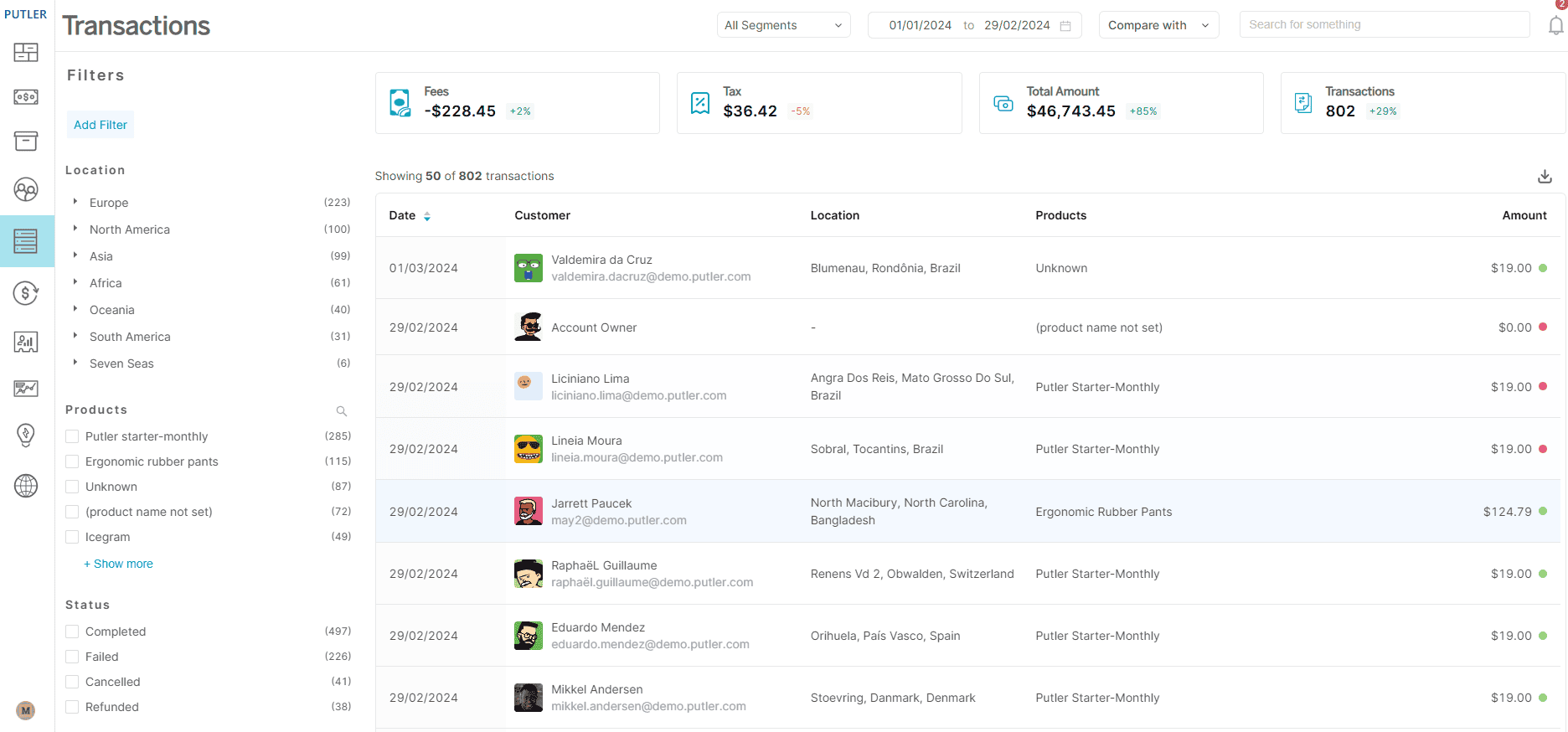
Transactions dashboard: a full view of every activity on your site, not just sales.
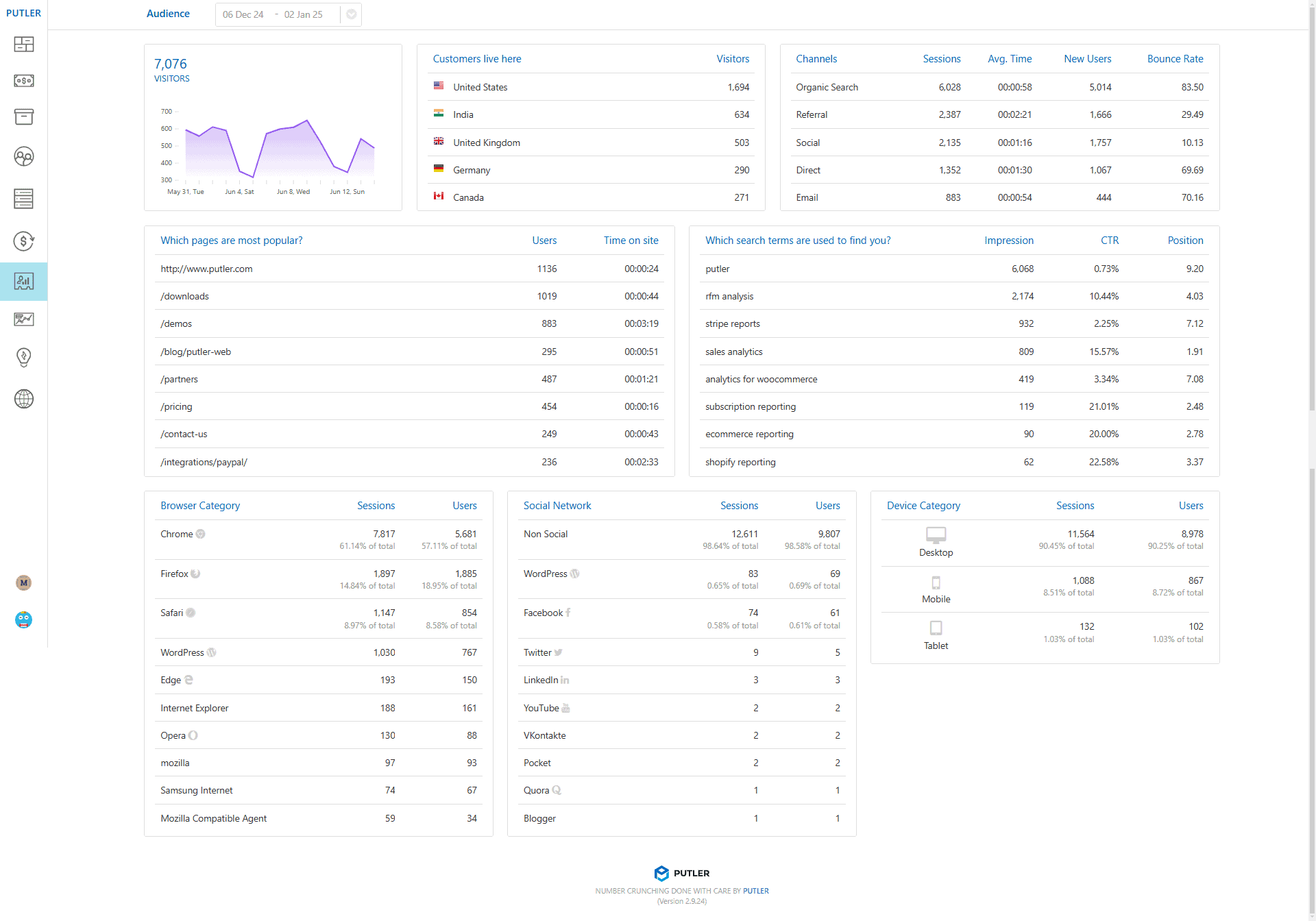
Audience dashboard: pulls the most important metrics from Google Analytics and displays them alongside your revenue data.
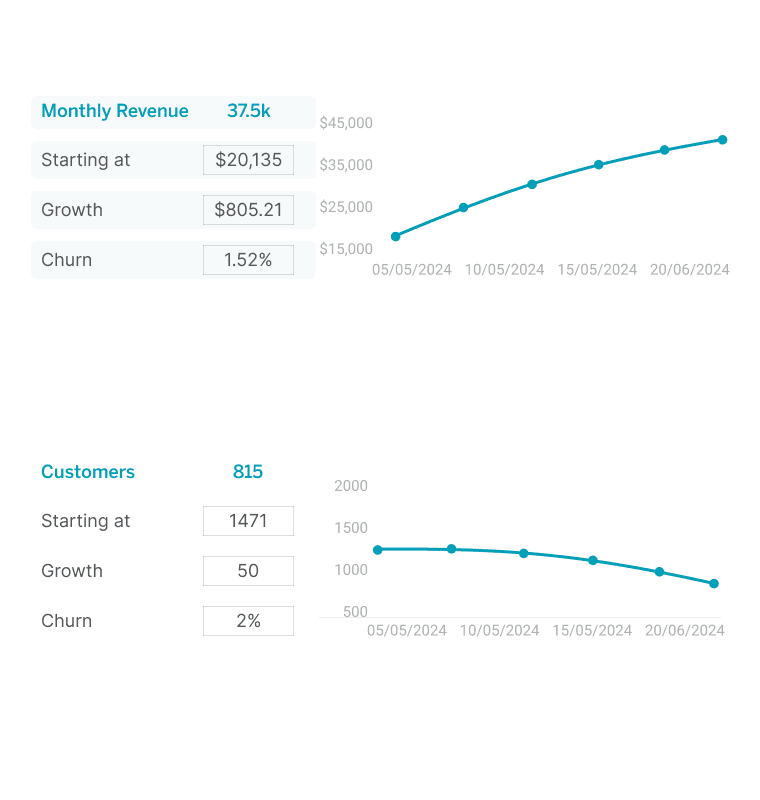
Time Machine: the forecasting view for monthly revenue, customers, and a 10X growth model.
Insights: an evolving dashboard with reports like Performance Comparison and Holiday Season.
Metrilo pricing in 2026
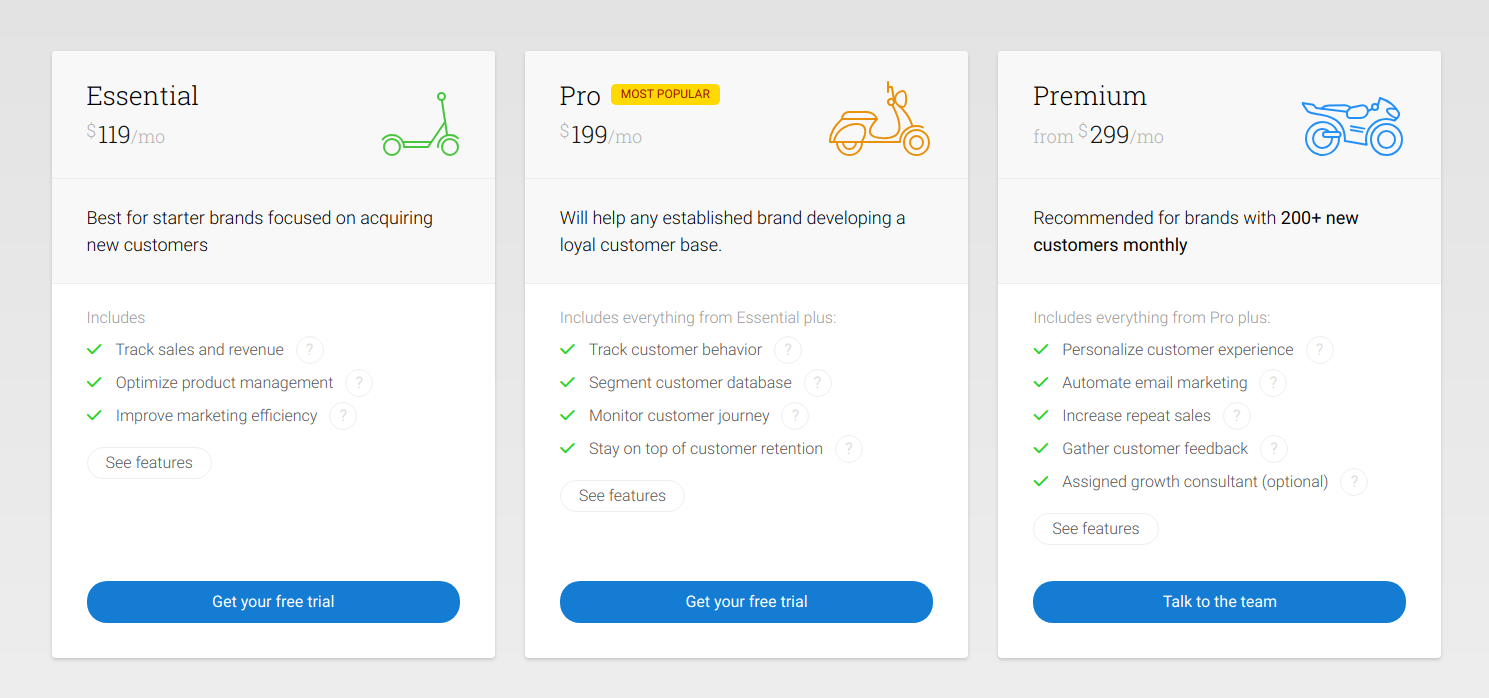
Metrilo pricing starts higher than most single-store analytics tools, which is the main sticking point in user reviews. All plans include unlimited team members, a 14-day free trial with no credit card, and a 30-day money-back guarantee. Here are the current plans, verified on Metrilo’s pricing page.
| Plan | Monthly | Annual (billed yearly) | What it adds |
|---|---|---|---|
| Essential | $199/mo | $165/mo ($1,990/yr) | Growth Assistant, ecommerce analytics, funnels |
| Pro | $379/mo | $315/mo ($3,790/yr) | Everything in Essential, plus ecommerce CRM and retention analysis |
| Premium | from $599/mo | from $499/mo ($5,990/yr) | Everything in Pro, plus email marketing. Priced by average new customers/month |
That is a real barrier for smaller brands. Essential at $165/mo annually is a meaningful monthly commitment before you have added CRM or email, which sit on the higher tiers.
Putler’s pricing works differently. It is metered by your monthly revenue, not by plan tiers with fixed feature walls, and it starts far lower:
- Starter: from $20/month. 3 data sources, 2 years of historical data.
- Growth: from $50/month. 15 data sources, 5 years of historical data, unlimited users.
- Custom: tailored plans for larger businesses.
Putler charges $1 for the first full month, bills monthly, and includes a 14-day free trial with no credit card. For a small or growing store, the entry cost gap between $20 and $165 is hard to ignore.
Wrapping up: the honest Metrilo review verdict
Metrilo is a capable ecommerce analytics and CRM tool for a single DTC store, with a clean dashboard, strong retention analysis, and quick setup. If that describes your business and the pricing fits, it is a fair choice, now backed by Brevo.
The moment your business runs on subscriptions, spans multiple stores, or sells across channels, a single-store tool leaves half your data out. That is the case for Putler as a Metrilo alternative: 17+ integrations, 9 dashboards, 150+ metrics, RFM segmentation, and a starting price of $20 instead of $165.
Frequently asked questions
Is Metrilo still active in 2026?
Yes. Metrilo still operates and sells its ecommerce analytics, CRM, and email marketing platform. It has joined forces with Brevo, so the product now sits within the Brevo group.
How much does Metrilo cost?
Metrilo has three plans. Essential is $199/mo ($165/mo billed annually), Pro is $379/mo ($315/mo annually), and Premium starts at $599/mo ($499/mo annually) priced by average new customers. All include a 14-day free trial and unlimited team members.
What is the best Metrilo alternative?
For sellers who need more than a single storefront in view, Putler is a strong Metrilo alternative. It connects 17+ data sources, supports ecommerce and subscription businesses, offers RFM segmentation, and starts at $20/month.
Does Metrilo integrate with Shopify?
Yes. Metrilo has an official one-click plugin for Shopify, along with WooCommerce and Magento. Putler also connects to Shopify, plus other stores, payment gateways, and Google Analytics for a combined view.
How Putler compares with other analytics tools
| Features | Putler | ChartMogul | Baremetrics | Metorik | GetControl(Out of business) | Compass(Out of business) |
|---|---|---|---|---|---|---|
| SaaS Metrics | ||||||
| Non SaaS Metrics | ||||||
| Website metrics | ||||||
| Number of Integrations | 17 | 7 | 4 | 4 | ||
| Integrations with PayPal | ||||||
| Team sharing available | ||||||
| Realtime updates | ||||||
| Multi-currency support | ||||||
| Aggregated reports | ||||||
| Individual reports | ||||||
| Customer Segmentation (RFM) | ||||||
| Send money functionality | ||||||
| Subscription Management | ||||||
| Process refunds | ||||||
| Desktop App | ||||||
| Chrome extension | ||||||
| Intuitive Search | ||||||
| Pricing | $20 | $100 | $50 | $50 |